
by Gloria Maslin, for a 2016 Australia Day speech
Updated: 22 September 2026
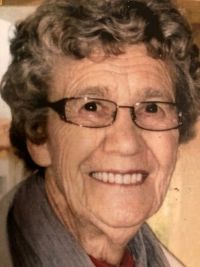
Good morning. Thank you for the opportunity to share my part of the Dardanup story.
My piece of paradise, my home for many years, was first settled by my grandfather Agostino Pedrolini.
Agostino Pedrolini came from a town called Teglio in the Valtellina region, which is in the province of Sondrio, Italy. Teglio is approximately 3 kms from the Swiss border.
He was born on 17 June 1868 and arrived from Italy in 1909. He was naturalised five years later on 8 August 1914.
His wife Teresa Fanchi arrived shortly after with two children Mary, three years and Jim, 18 months.
Agostino had originally gone to America with his two brothers, but he left there to come to Australia (which he called the best country in the world) because as he told his neighbour Mr Gilmore who lived on Paradise Rd “Wild men over there, they fight with knives”. His brothers, however, stayed in America, married and had families. I do not know how much communication they had after that.
When he arrived in Australia, Agostino worked in the gold mines in Kalgoorlie and as a timber cutter before taking up 300 acres of land on two titles in the Henty area of Dardanup. He milked cows, reared calves and had a few pigs and fattened steers to sell yearly. With Teresa, they grew most vegetables and were almost self-sufficient.
They were hard days – raising your own animals, milking cows by hand and sending cream to the butter factory in Bunbury. Rearing pigs proved interesting. After all, you needed a good one to make Italian sausages. Of course, you needed a boar if you wanted your sow to have piglets. He had to call on a neighbour (again Mr Gilmore who lived on Paradise Rd), to bring his boar to the property. Now there were no cattle trucks in those days, so the boar had to be walked over, and this was achieved by using mash. You kept feeding the boar the mash to keep him walking to Dowdells Line.
Italians liked wine with meals. So, Agostino planted five-acres of grape wines on the home block and two acres over the road that he had kept when he sold the other block. He made fortified wine which we called plonk!!
He also built his house, which was wood and also fully lined with wood. Attached to that was the all-important cellar. It held 2 x 2000-gallon barrels, plus 3 x 1000-gallon barrels, and then a variety of sizes slowly going down to 5 x 10 gallons. Wine was sold as far away as Kalgoorlie.
Sadly Teresa died accidently, she was walking under a large burning tree when a limb fell on her, and Agostino was left with four children. Mary, my mum had to leave school (she wanted to be a teacher) and take over the house, milking cows etc. to keep family together with her only brother and two little sisters. Sadly, again however, shortly after Teresa’s death, the youngest girl, Katy died with diphtheria. She and Teresa and later Agostino, who died later in 1945 aged 77, were buried in the old Dardanup cemetery.
Mum eventually met Dad – Giovanni (Jack) Bertelli, who was one of many who came to buy wine.
Giovanni came from the town of Quinto di Treviso in the Veneto area of Italy which incorporates Venice. Jack was 18 when he came to Australia in 1912. He always said of Italy that he never wanted to go back and visit, because all he knew was poverty and hunger.
Mum and Dad were married in the old Catholic Church Dardanup in 1928.
They first bought a farm at Coolup. It was a soldier settlement farm which was not doing well and they lost their money because just as the soldiers had trouble making it pay, so did Mum and Dad.
Agostino offered them the home farm. My mum was given a share, which was unusual in those days, because Jim, the son, was not interested. He wanted to be a mechanic.
Mum and Dad carried on farming, modernising to a milking machine. They had five children, two died as babies. Mum died when the last one, my sister Mary was born, she was only a day old. I was nine and my brother Gordon was two years old. When Mum died, we were farmed out to relatives for care. Gordon and Mary went to different relatives to be looked after, and I first went to an aunt in Collie, then to an older cousin. Being a brat, I can still remember saying. “You can’t tell me what to do, you’re not my mother”. What a horror!
Dad leased farm to two nephews Lui and Peter Bertelli.
When the lease ended, Dad got the three of us together at home. The problem was I was too young to accept responsibility and I left and took the younger kids back to relatives who could better look after them. Once more he leased the farm to some local families.
Later I was sent to Boarding school, the Convent of Mercy in Bunbury. It was the best thing that ever happened to me. Our house mother Sister Rose was wonderful to us all. She even taught us to dance in the recreation room. The area was not large, but we loved it. The ages of boarders ranged from four and half years to around about 15 to 18 from memory.
I left school just after World War II ended. I went to Manjimup and worked as cashier in a butcher shop and also packed apples which were destined for the overseas market.
At this time, Dad once again tried to get family back together, and Gordon, Mary and I came back to the family farm.
It was around this time that I met and later married Mas – Guy Hall Maslin.
Mas had just finished six years in the army. He had had to get his parents’ permission to join up as he was not yet 18. Mas’ father, Guy Loftus Maslin, was a World War I veteran. He had been gassed in the war and came home a very sick man. Unfortunately, he died when Mas was in the army.
Now, I had heard so much about “Massie” from his Aunt and Uncle who lived next door. I took Aunty Maude to Dardanup Railway Station to meet him. I remember not being too impressed meeting him! Massie and Aunt Maude promptly adjourned over the road to the local pub, waiting for Uncle Frank to finish work. They loved their beer.
In spite of first impressions, I got to know Mas. We married on 24 September 1949.
Sadly, just after I got married, my brother Gordon died at just twelve years of age. Doctors told us that unfortunately penicillin was not available at that time here in Western Australia. If it had of been available, things may have been different.
Mas was in the railways, and he was stationed at Katanning, so we moved there. Housing was very scarce after the war so there were no houses for us, and we had to find somewhere to live. We ended up finding a lady who allowed us a part of her house, one small room and the use of a kitchen. Unfortunately, she was ‘not a very nice landlady’. Still, it was somewhere to live.
Finally, we got a house plan drawn up. As builders were scarce as hen’s teeth, good old Mas states “I’ll build it”. So, with lots of help brickies, plumbers etc. we set about building the house. We first lived in two bedrooms, using one as the kitchen.
Part of the plan was to have a double fire place for lounge and kitchen. This required another brickie and therefore we had to save enough money to pay him. One of the things I did as the house was being built, was rear 100 chickens in the “lounge” for a short period until they were big enough for the chook pen.
I also worked in Foys in Katanning. I loved work and meeting so many different people in farms out of town, doing the accounts etc.
Finally, our family started and baby Lyn arrived, then 20 months later Veronica, Ronnie. It was then that Dad came to visit and suggested we come back to the farm as lessees. This we agreed to do. Goodbye Katanning and many friends.
We bought our first vehicle, a blue Dodge Ute on 25 March 1955. Mas did his last shift at the railways near Wagin on 25 June. Then we set off for the farm, arriving on 3 July.
Travelling over I nursed Lyn and Ronnie was in a cardboard box. No capsules and car seats and belts in those days! We also had some furniture loaded on the back.
We later bought the farm on 20 December 1961. My sister Mary and I had been given a quarter share each in the farm and Dad owned the rest, so we had to buy out Mary and Dad.
We continued farming and making wine. The grapes were picked using old kerosene tins as containers, loaded onto the dray (good old horses in those days) and loaded into cement tanks for crushing. The tanks themselves formed one wall of the cellar which was attached to the house. Once the grapes were fermented, wine was pumped into larger barrels, and the sediment was pressed to remove all juice.
We started picking our first vintage on 10 February 1956. We started picking our last vintage on 2 March 1964.
We finally built a new house in 1965. This is the house I still live in. Getting a loan to do this was not easy until I mentioned that Mas was a returned soldier. Then they couldn’t do enough for us. After all the time waiting, this was a big laugh for us!
We had dairy milking cows, we were also feeding calves and rearing a few fat steers. Our third child Gordon Joseph was born. He was named after my brother who died young. Poor Gordon had two big sisters to deal with, and later two younger sisters. Four years after Jenny arrived, then five years later another daughter Ann.
One year after Jenny another baby boy was born, but he had a heart condition and was known as a blue baby, he only lived five months. The specialist told us later that in 20 years we would have heart transplants. It was only five years before Dr Christiaan Barnard actually performed the first heart transplant. The wonders of modern medicine!!
We have Paradise Creek running through our property and kids being kids! I was at the clothesline at the back of the house (washing being a much bigger chore before the days of automatic washing machines) when Lyn came running up. She was only three years old, not saying much but enough for me to know something was wrong, I ran to the creek, and there was Ronnie holding onto growth on other side of creek, God only knows how she crossed the creek. Anyway, I waded in water up to my thighs to cross and get her, so much for my plea, “Do not go out the calf gate to the water”.
Another water story I was told this many years later!! As some of you may know the irrigation channel also runs close by us, and it was used as a swimming pool in the ‘good old days’. Ronnie took Gordon for a double dink ride down the channel, then preceded to sit on a plank across channel with him with feet dangling in the rushing water. Of course, being so little, in he went. She only just caught him by his arm.
Well, the family all grew up and went their separate ways and now have families of their own. I am now Grandma to 13, and great Grandma to 12.
Mas died of cancer on March 30, ninety years age. He never complained or considered it was more than a sore back. Indeed!
I am happy and proud to still live on a small area of the land my grandfather took up one hundred years ago.
Thank you for listening to my story.
Reference:
- Maslin, Gloria (1931 – 2024): Speech for 2016 Australia Day celebration at Dardanup, provided by Jenny Maslin.

