
by Darren Foster
Updated 2 August 2023
PARISH OF KILLEENTIERNA

The descendants of Patrick Slattery and Rose Hanlon Slattery of Dardanup and then Upper Ferguson in Western Australia can trace their ancestry to the parish of Killeentierna, the town land of Kilcow, in County Kerry, Ireland. Historically, though, the names Slattery, O’ Slatara, and O ‘ Slatraigh, meaning ‘ strong ‘ originated in Ballyslattery in East Clare.
On February 1 7, 1816, in the parish of Killeentierna, a young farmer named Patrick Slattery married Ellen Daly, of the same parish, in a ceremony performed by the Reverend D. Dwyer. The witnesses were Daniel Slattery and Joan Daly.
Patrick and Ellen Slattery had three children in the following years, named Patrick, Ellen and Timothy. Patrick was baptised on May 20, 1829, the same year as the founding of the Swan River colony to which he would later be transported. His sponsors were John Daly and Mary O’ Sullivan. Ellen was the next born, and she was baptised on April 14, 1832 with Michael Quinlan and Kate Burns as sponsors. The third child was a boy, Timothy, who was baptised on May 27, 1835 and sponsored by Michael Daly and Mary Daly.
CONVICT NO. 2515
Between 1845 and 1851, Ireland was devastated by a famine which prompted waves of emigration and petty crime, At the height of the famine, young Paddy Slattery was arrested for committing a burglary. At the time he was described as an unmarried labourer with a prior conviction, He was tried at the Tralee Summer Assizes on Monday, July 15, 1850 before the Right Honourable Lord Chief Justice Blackburne. Paddy was sentenced to 10 years for ‘burglary and robbery’ and was sent to Newgate Prison to await transportation. Another Slattery, named Cornelius, of the same parish and probably a cousin of Patrick ‘ s, was arrested in 1852 for larceny. Cornelius, who was 26 at the time of his trial on April 13, was sentenced to 7 years transportation. He was not so lucky as Patrick, for he died in Spike Island Gaol, County Cork, on April 2, 1853 while waiting to be transported.
SWAN RIVER COLONY
Patrick Slattery arrived in the Swan River Colony on August 31, 1853 on the ‘Phoebe Dunbar’ . The ship’s manifest lists him as “5 foot, six and a half inches, brown hair, dark blue eyes, round face, sallow skin, stout, slightly freckled “. Patrick was held in Fremantle Gaol from September 1853 to August 1854, where his demeanour was described as “quiet but indifferent “.
On August 24, 1854, Patrick was granted a ‘t ticket-of-leave” and on September 1 he was employed under that scheme. One of the projects Patrick was supposed to have worked on as a ticket-of-leave labourer was the Church of the Immaculate Conception in Dardanup, the foundation stone of which had been laid by Bishop Salvado in March, 1854. The church was blessed and opened on April 19, 1857. Family legend has it that because of his early association with the church, Patrick tipped his hat to it every time he passed.
DARDANUP
It is probable that in the mid 1850s Patrick was an employee and tenant of Thomas Little, a prominent landowner in Dardanup. At this time, Little was attempting to establish a Catholic community in the area by marrying off former convicts to young Irish girls brought to the colony as domestic servants , and then settling them on small leaseholds . This is perhaps how Patrick Slattery was introduced to 20 year old Rose Hanlon, whom he married in 1859.
Rose was the daughter of Bernard Hanlon, a farmer of County Tyrone, and his wife Catherine Slavin.
Rose arrived in the colony in 1858 on the ‘Emma Eugenia’ and married Patrick on the 16th of May, 1859 in the Church of the Immaculate Conception, Dardanup. Both were living in Dardanup at the time, so Rose may have been a domestic servant to Mr Little. The wedding was witnessed by Joshua Wood and Helena Burke, a nurse who arrived with Rose on the ‘Emma Eugenia ‘.
Soon after the couple were married, on October 10, 1859, Patrick was granted a conditional pardon.
Patrick and Rose settled on a small leasehold property in Dardanup which later became known as ‘Slattery’s Field f . It was here that their eight children were born. The eldest child, Patrick, was born in 1860, followed by Mary Anne in 1861. In 1863, Bernard was born, and was followed by Daniel in 1865 and James in 1868.
In 1864, Patrick employed ticket—of—leave man Richard Downes for a short time.
In the mid 1860’s Patrick applied for 40 acres of Crown land in the Wellington district. In February 1867 Patrick wrote to the Surveyor General Septimus Roe complaining that the land he had been assigned was not that for which he had applied. To make matters worse, the 40 acres he wanted had been assigned to a Mr Gardiner. Patrick requested a refund of his 2 pound deposit if the matter could not be rectified. In December 1867, Patrick finally secured his 40 acres.
In any case, Patrick must have begun to prosper as in 1870 he employed James Devine as a general servant.
In 1874 , Patrick also employed James Gifford as a servant.
In the 1870’s Patrick began to build up his landholdings by taking out special occupation leases. The ticket—of—leave men were probably employed to help Patrick clear the land so he could meet his lease conditions.
In September 1876 Patrick wrote to the Commissioner of Crown Lands requesting that 28 acres adjacent to his existing 100 acres be surveyed so he could start fencing. In May 1877 he acquired a further 86 acres.
In 1879 Patrick wrote to the Commissioner for Crown Lands requesting the title deeds for the 40 acres he acquired in 1867, He had first written for them in 1877 but received no reply •
While Patrick’s landholdings at Upper Ferguson increased in the 1870 ‘s, so did the size of the Slattery family. Another son, Edward was born in 1870, Catherine was born in 1874 and Rose Ellen, the youngest, was born in 1876.
Eventually, the Slattery family moved to Upper Ferguson, where the slopes had been grassed with chaff from ‘Slattery’s Field’ . The chaff cutting at ‘Slattery’s Field’ was not without incident. Daughters Rose and Kate were playing with the cutter when the wheel turned severing Kate’s finger at the knuckle.
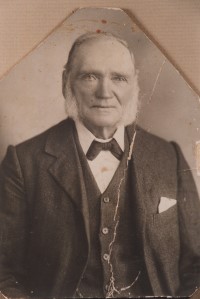
The Slattery’s Ferguson property was named ‘Brooklawn’ and a house was built of pit sawn timber with plaster and paperbark (mud mortar) walls and a shingle roof. There was a verandah on the front and sides, which was later enclosed to form four more bedrooms in addition to the three main rooms. The kitchen was at the back of the house and in easy reach a small orchard with pear and fig trees. Patrick grew potatoes on the well drained slopes reminiscent of Ireland, and later established a dairy.
Tragedy struck the family on July 27, 1885 when Edward, youngest son of Patrick and Rose, died reputedly of snakebite complicated by congestion of the lungs. He was buried in Dardanup Cemetery.
Two years later Patrick and Rose celebrated the marriage of their eldest son Patrick to Mary Flynn, the daughter of Henry and Mary Flynn of Ferguson .
Bernard Slattery, a policeman and later farmer, became the second to marry when in 1893 he wed Mary Agnes Bird, daughter of Charles and Bessy Bird.
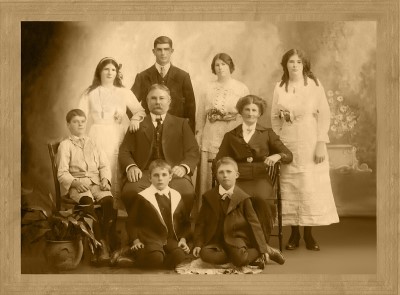
His sister Mary Anne Slattery married Thomas William Harris of Dardanup in November of 1893. Kate Slattery and two Harris sisters were bridesmaids, and the wedding banquet was held at ‘ Brooklawn .
In 1899, Kate Slattery married George Harris, brother to Thomas Harris. A year later he was tragically killed when he was struck on the head by a winch handle while working on a bore, leaving Kate with infant son Gregory George Patrick.
Kate remarried William Henry Prout in 1908 and had four more sons .
Rose Ellen Slattery, the youngest in the family, married James Rodgers in 1902 and Daniel and James Slattery never married.
In her later years Rose Hanlon Slattery kept in contact with her sister Margaret who had emigrated to Boston, Massachussets and married junk dealer John Noonan. The Noonans had a large family of 10, only three of whom married. Two sons graduated from Harvard University, one as a doctor and the other a dentist.
On January 4, 1905, Rose Slattery died aged about 65. She was a deeply religious woman who had played a big part in educating her children. Sadly, she spent her last years in blindness . Patrick entertained his growing number of grandchildren by taking them to Australind on weekends in his horse and sulky. His horse was known as ‘Hobbity Dick’ .
One day while driving his young granddaughter Kathleen from Ferguson to church in Dardanup, his hat blew off. He sent Kathleen to retrieve the hat and when she returned continued on. At that moment a tree branch crashed to the road in front of them — if they had been moments earlier they would have been killed. The pair could not move the branch so didn’t make it to church that day.
Patrick also ventured out of Western Australia in his later years, visiting the Eastern States at least twice.

On August 20, 1915 Patrick died of a heart attack aged about 86. He had gone for a walk after tea along the railway line and collapsed where it crossed the Ferguson River. He was buried at Dardanup Cemetery.
Patrick’s sons took over the farm at Ferguson and in 1929 the old house was pulled down.
Patrick and Rose were survived by seven children, 30 grandchildren, and 90 great grandchildren .
Images: All photos provided by Darren Foster
 Dardanup Heritage Collective