
Updated: 1 April 2025
Memories of Wellington Mills written by Joan Gardiner, part in 1996 and part in 2003 after Joan moved from Wellington Mills to Eaton. The memoirs are reproduced as written.

It seems that Wellington Mills has always been part of my life. When I was very young, my father, Edward Browning, Ned, as he was known, used to speak of Wellington Mills, and the people he had known here, including Mr And Mrs Bill Gardiner, whom he always referred to as Bill and Flo Gardiner. Many years later I realized they were, in fact, Albert and Flo Gardiner, Syd’s parents.
My father, at this time, worked at the Lowden Timber Mill, about one mile, or just a couple of kilometers from Lowden store on the Lowden Ferguson road. My first visit to Wellington Mills was, from memory, when I was about 12 years old, about 1941. We lived at Riverside, Lowden and my father then worked on a farm owned by Mr Oldmeadow. A friend brought my sister Mary and me for a drive one Sunday afternoon, which seemed such a long trip in a truck over a winding gravel road, which I often think of as I travel over this road today, quite a highway compared to those days.
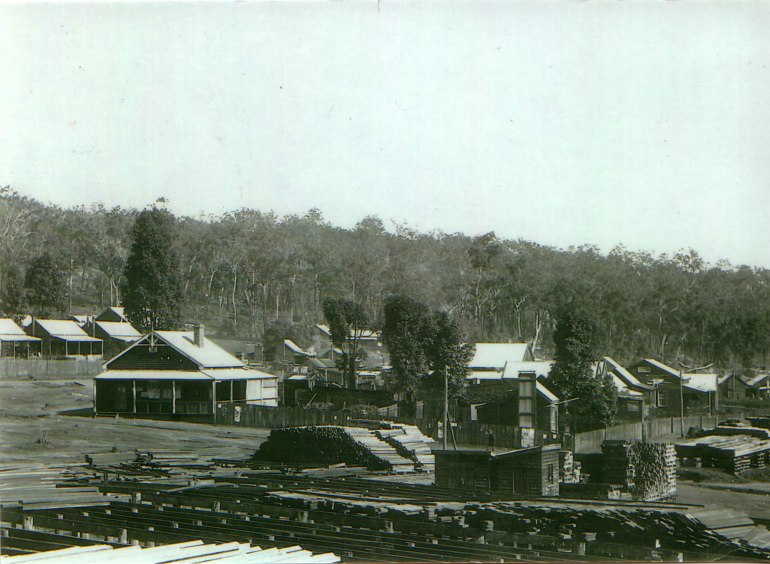
We drove to the mill town past a street of houses, the water tank, which I will never forget. I remember the children playing and running around and thought how lucky they are to have neighbors so close. Of course, the mill had closed several years earlier. Probably the caretaker would have been Mr Ferres Bob, employed by Millar’s timber company. After this, my sister and I came to the occasional Red Cross dances which were held in the old Billiard Room. Of course, we did not realise this at the time, it was just a small hall to us. We travelled to the dances with Mr Charlton Fowler of Lowden on the back of his truck.
I learned many years later that Mr Albert Gardiner and Mr George Ashcroft donated all the glasses, cups and saucers used at these functions and many more until 1972. I still have about a dozen of these today. We danced to the music of Mrs Mary Ferres’ piano, Mr George Ashcroft, button accordion and Syd Gardiner, sometimes button accordion, and also Mr Lloyd piano accordion.
Later, I came here to stay with Syd’s parents, who lived at the Forestry Department. I would have been about 17 years old, and I lived in Donnybrook. The Forestry Department is now the Ecotel Holiday Village (1996).
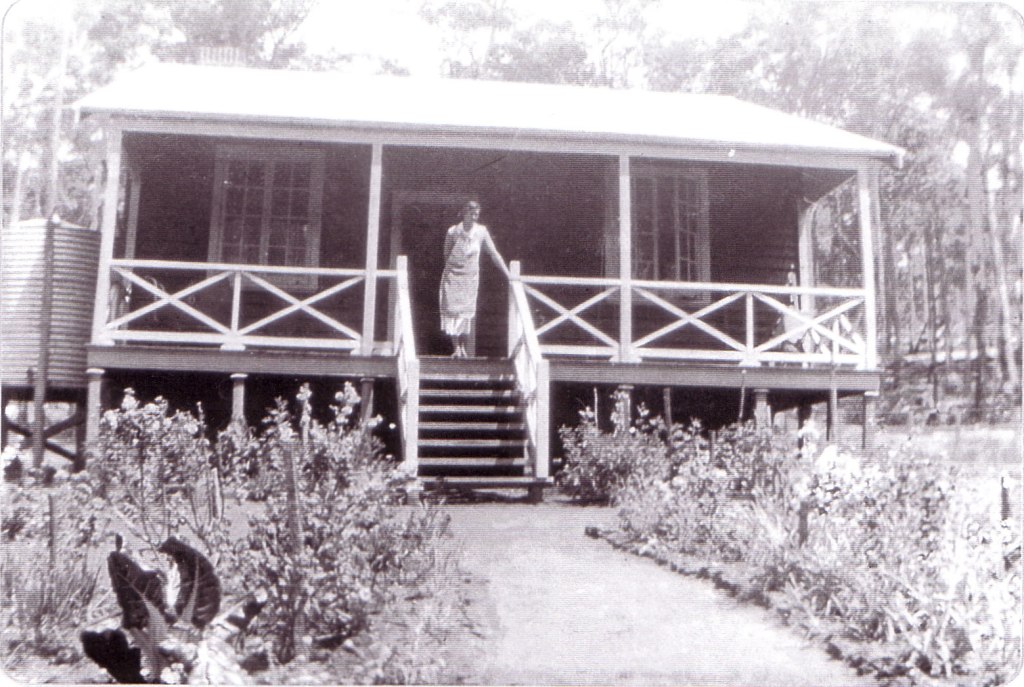
In 1947, Syd’s parents left the Forests Department and purchased Wattle Springs from Mr Wilkinson, now Doherty’s. Other residents at the Forests Department at this time were Mr And Mrs George and Doris Ashcroft, Mr And Mrs Jim and Ruby Wight, Mr And Mrs Allen and Nancy McGuire.
Syd and I were married on 15 April, 1950 and as our new home had been destroyed in the disastrous bushfire on the eve of our wedding, after our honeymoon in Albany, we returned and we lived with Syd’s parents until September 1950.
I will always remember the scene of utter devastation on that early morning of the 15th of April 1950 as I walked through Wellington Mills with my mother and the friends who had driven me from Donnybrook at about 5.00 am. At this stage, we were walking, could not drive any further, as so many trees were over the road. We probably walked two miles. All telephone lines were down and so no communication from Donnybrook.
However, our wedding went ahead as scheduled that afternoon. Many of our guests were unable to come as they couldn’t get through from Ferguson. My second bridesmaid, Joan Gardiner of Ferguson, could not be there. Syd was suffering from the effects of all the smoke and heat from the previous day and was very tired. His parents were shattered by the great loss they had suffered. All that stood was the homestead. They lost all the farm sheds, most of their cattle. The bridge at the bottom of the road to the house over the Ferguson River had gone and almost their car. Such a stark contrast to the Wellington Mills that I had known just two weeks previously when I came over to see our new home.
In September 1950, Syd and I moved to Dardanup where Syd was employed by Mr Bill Prout who had a trucking business. We lived there for four years on the property of Mr Frank Wells, one mile south of Dardanup, in an old home which had been transported from Wellington Mills many years earlier, and where Brian and Gwen Wells live today in their new home.
Our son, Jeffrey, was born on 28th of September 1951. We have many happy memories of these years. We played badminton, hockey and tennis, and had many social outings. I played hockey for Boyanup Hockey Club and went to country week with them. And Syd played for Ferguson, and a strong team that was! The Badminton Club was a strong one, and most enjoyable. We played away matches with Bunbury teams and Waterloo, Burekup, Elgin and Donnybrook. The Club was formed about 1952 by Mr Jock Johnston. We played tennis with the local club, and that too was most enjoyable. We went to many balls, dances and later cabarets and those card evenings with friends from Ferguson! Syd was a strong tennis and baddie player.
Sadly, my dear father passed away in Donnybrook on 18 July, 1953.
Mrs Florence Hulm was the post-mistress at Wellington Mills at this time, and had been for many years. In August 1954 she contacted us to see if Syd and I would take over the Post Office and little shop as she was very keen to retire to a well earned rest. And so, after the formalities had been finalised, at the end of September that year, we moved back to Wellington Mills, and we have lived here since.
Syd was unhappy to be moving away in 1950, the only time he had moved away, except for the two years with the Australian Army, with the occupation troops in Japan, the BCOF, British Commonwealth Occupation Force, after the war years.
However, it was necessary at the time, and a decision we made. When we returned in 1954, Syd drove milk trucks for Mr Arnold Gibbs of Ferguson. Gradually, Syd’s parents had rebuilt the farm buildings and their dairy herd, and after years of hard work, after such heartbreak, were almost back to normal. Syd spent some weekends to help his dad when we lived in Dardanup, many of his mother’s friends had moved away from the area after the fire, which was very sad for her. When we moved to Dardanup, our only means of transport was a motorbike, but after moving, we bought a Ford utility.
We will also never, no doubt, never forget the day we moved to the old Post Office at Wellington Mills, which was to be our home for the next 10 years. Jeffrey was now three years old.
We purchased the building from Millar’s Timber Company for £100 ($200). We paid two pound or $4 per year to the Forests Department, but no council rates. We owned the building, but not the land it had been built on, a Millar’s lease. Termites or white ants had almost taken over the building. We demolished an old room out the back of the house, which had been almost destroyed.
The side verandah and part of the front had almost rotted away, and a small water tank at the back of the house overflowed incessantly filled by reticulation from the old town dam. One wonders how insurance companies would react to this today, with so many litigation cases on the agenda, especially in a public building, almost!
Quite a large room across the front of the house was used as Post Office and shop with a wooden partition dividing the two. A small lounge room with open fireplace and a bedroom in the middle. And the kitchen and tiny bedroom were built in at the back, probably once a verandah, and beyond this another lean-to and the bathroom. The entire building was lined with jarrah tongue and groove boards, as the Post Office area is today, always unpainted.
The middle area that was lounge and bedroom was painted very dark green, including the doors with black architraves and skirting boards. Hard to imagine I know.
The kitchen was a pale shade of green, as was the bedroom, but painted with kalsomine, which had to be removed before painting. Gradually, we repainted, relined, had many bonfires and rebuilt. Syd built a laundry at the back and renovated the bathroom. And when Alf and Lena Johnson moved away from Wellington Mills to Karragullen, they demolished their house and moved it and Syd bought some lining board from them and relined the little lounge room over the boards, paint and all. And then we repainted it in a pale color.
The house was surrounded at the back and side by an old, solid wood fence with lucerne trees, grapevines, etc within the backyard. One could only marvel that the old fence and building was still standing after the 1950 bushfire, a complete mystery. Almost all the old mill homes here at the time were destroyed, and the school buildings, the caretaker’s home, and indeed, the old wooden water tank, were destroyed on that fateful day,
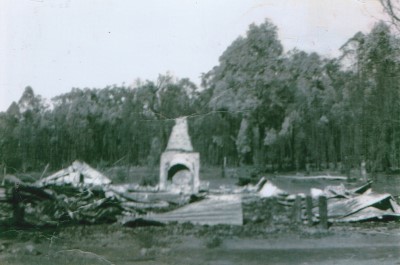
Bob and Chrissy Wight’s and Jack Wight’s home were lost, and all outbuildings and contents. Beyond this the Paget home was destroyed. It was unoccupied at the time. It originally belonged to Syd’s grandfather on his mother’s side, Sidney Paget.
As mentioned elsewhere, Syd and I lost our home on the eve of our wedding. The old Billiard Room and Library were left standing, as were the old boarding house, two old outbuildings towards the river, the old manager’s home, then Mr Zagami’s, now Tom and Enid Hall’s, Lena and Alf Johnson’s home, and of course, the old boarding house was occupied at the time by Hector and Daphne McLeod.
I celebrated my 21st birthday there with a party on 18 May, 1950. Later, this was demolished and sold to Mr Andrew Garbelini. The two buildings towards the river were purchased by Mr Bob Wight and Mr Albert Gardiner to rebuild sheds on their properties. The lovely old engine, the Samson No. 2 still stood on the old railway line below the Post Office, perhaps as a memorial to the old mill town.
The Wellington Mills Office was classified an unofficial post office, which simply meant no money order transactions. Remuneration was calculated on volume of business; mail inward and mail outward, stamp and postal note sales inward and outward. Telephone calls count months, mail and calls were each May and November. A Commonwealth Bank agency was also conducted here.
A public telephone was situated on the wall of the front verandah, connected to a phone in the office. Mail inward and outward was each Tuesday and Friday. The mail run to Daranup was done by Mrs Pat Hunt from the Forests Department settlement with delivery to mailboxes in the Ferguson area and a sealed bag to Wellington mills.
On occasions, I did the mail run to Dardanup if, for some reason, Pat was unable to go. Syd’s mother would attend to the Post Office and exchange. Wellington Mills folk collected their mail and bread from the Post Office. Bread delivery from Dardanup was each mail day.
Below are listed names of the residents at Wellington Mills in 1954:
- Sam and Florence MacLeod
- Eric McLeod (Dick)
- Thomas and Enid Hall, their children, Geoffrey, Lesley, Michael and Ross Hall
- Robert (Bob) and Chrissy Wight, their children, Tony and Vicky Wight
- Jack Wight
- Mr and Mrs Joseph Lockyer, Colin and Barry Lockyer
- Mel and Sylvia Chapman and family
- George and Florrie Chapman and their children, Terry, Velma, and Lorelle Chapman
- John and Isabella Weetman, their son Robert Weetman and Janette Weetman and Lorrie or Lorraine Weetman
- Mr and Mrs Joe Zagami, their children, Josie and Joe Zagami
- Alf and Lena Johnson and their children, Alf Jr, Gordon, Beverly and Merlene Johnson,
- Albert (Bill) and Flo Gardiner, and their sons Leslie and Raymond Gardiner
- Sydney and Joan Gardiner and their son, Geoff Gardiner
- Len and Millie MacDonald and their children, Harold and Rosemary McDonald,
- Jake and Shirley Gardiner and their children, Jacqui and Chris Gardiner
- Fisher Muller and his sons, John , Wayne and Keith Muller.
At the Forestry Department, there were:
- George and Doris Ashcroft
- Harry and Pat Hunt and their children, Stephen, Chris, Brenda and Gail Hunt
- James and Rita Fowler and their daughters, Lenore and Deborah Fowler
In 1956 telephones were installed for most residents, a pyramid switchboard was installed at the Post Office. There were two party lines and a number of private lines. Such progress was welcomed by all here. The Ferguson and Dardanup exchanges were also on our main line to Bunbury. We could ring Ferguson and Dardanup independently, but all other calls were connected through Dardanup or Bunbury. There was also a Forestry phone situated in the shop as the Forests Department did not at this time have a PMG phone connected.
We sold mostly deli lines in the shop and a few grocery lines and perishables, soft drink, sweets and the all important tobacco and cigarettes. We could buy through wholesalers. D J Fowler in Bunbury for grocery lines, Plaistowes in Bunbury for sweets and Thomas Stokes for soft drinks. We also conducted a newsagency, the West, Countryman, Western Mail and all magazines of the day could be ordered through Gordon and Gotch and Western Press and West Australian Newspapers.
The West came out from Dardanup almost every day; with the mail on Tuesday and Friday, with Thomas Hall on Mondays and Wednesday on his carrying run, and with whoever happened to be passing through Dardanup other days. We also conducted a fuel agency from 1957, originally known as the Commonwealth Oil Refineries, COR, and later as BP Australia Ltd. We sold all fuels and oils.
After our daughter, Shelley Denise, was born on June 5, 1955, Syd built another small bedroom and dining room on the side of the house by building in most of the side verandah. That was wonderful, it certainly relieved the congestion in the small kitchen. Mod cons were few and far between. We managed with washing with copper and troughs. Later, a hand washing machine, washing board, Mrs Potts irons, petrol iron, 32 volt iron, Aladdin and small kerosene lamps, a Tilley lamp, which made an awful swishing noise, but had a pretty good light. Later, 12 volt lighting to SEC in 1964. The SEC (electricity) was connected on 14 October 1964 on the contributory scheme. The cost to have access at the Post Office was £160, or $320. We had moved to our new home just before the power was connected.
After the fire in 1950, school was conducted in the old Library and Billiard Room. Mrs Isabella Weetman was the teacher until August 1959. A relief teacher, Mr Malcolm Humphries taught until the end of that year.
Until the school closed down in December 1971 the following teachers were at Wellington Mills:
- 1961- 63 – John Thompson
- 1963 – 1964 – Peter McLeod
- 1965 – 1968 – Max Tully
- 1969 – 1971 – Alan Ward
Our school teachers were always part of our small community, and many times, organized events that we all enjoyed.
A new school was built in Dardanup for the 1972 school year, and now in 1996 over 150 students attend this school. Ferguson and Waterloo schools were also closed in 1971 and joined Dardanup.
The Wellington Mills Parents & Citizens Association worked tirelessly for the benefit of our school children. We had endless meetings with Education Department officials and Parliament parliamentarians to have a decent school built here. Numbers at the school would dwindle, (a wonderful excuse to close the school) and then build up again. The Department would suggest bussing our children to Donnybrook or Boyanup or Picton or Bunbury, and strangely enough, never to Dardanup.
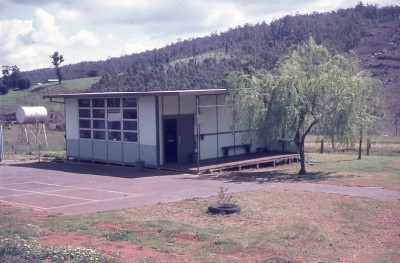
However, in 1966 a new transportable classroom was built at Wellington Mills, just below the old Billiard Room, almost where the fire brigade shed stands today (1996) and as mentioned earlier, was to finally close in December 1971, and so was only enjoyed for a few short years. During the early 1960s a Youth Club was formed, meeting each Friday evening at the Billiard Room, and was enjoyed by the young people of the Wellington mills and Ferguson Districts. I learned to play Euchre at these evenings.
A Christmas Tree was held each year. Syd’s parents, Albert and Flo Gardiner, organised these for many years, with the help of all residents. Two or perhaps three of the parents would shop for the gifts from lists provided by the parents. It all worked very well and was enjoyed by all. The final Christmas Tree at Wellington Mills was held in December 1971 in the new school classroom
Each year on Guy Fawkes Night, 5 November, we had a huge bonfire, crackers, skyrockets, etc. Everyone joined in these, and they were lots of fun. Of course, all finished these days, thought to be too dangerous!
Although I cannot remember the year, probably 1956 or 1957, I will always remember the sad feeling as I watched from my kitchen window as Midalia & Sons from Perth dismantled the old engine and the remaining rail line and carted it off to Perth. Not one photograph have I of that engine, and perhaps it was the most photographed old engine in WA as we watched the many tourists climbing upon it and posing for photos, I often wonder if perhaps one day I may see one!
It was a sad year for us in 1963. Syd’s dear mother passed away after a long illness in January that year.
In 1960, Syd purchased the two milk cartage contracts and trucks from Arnold Gibbs of Ferguson. He also did general carrying, between milk runs, super and hay carting, etc. The milk run was to Harvey twice a day, 365 (or 366) days of the year. It was a very busy time as the volume of business at the post office seemed to increase all the time. We employed a full time driver and casual drivers. Syd’s day commenced at 7.00 am to 12.00 pm then from 5:30 pm to 10.00 pm, long days. The Post Office Exchange hours were from 7.00 am to 7.00 pm, six and a half days a week, and longer, if we were home.
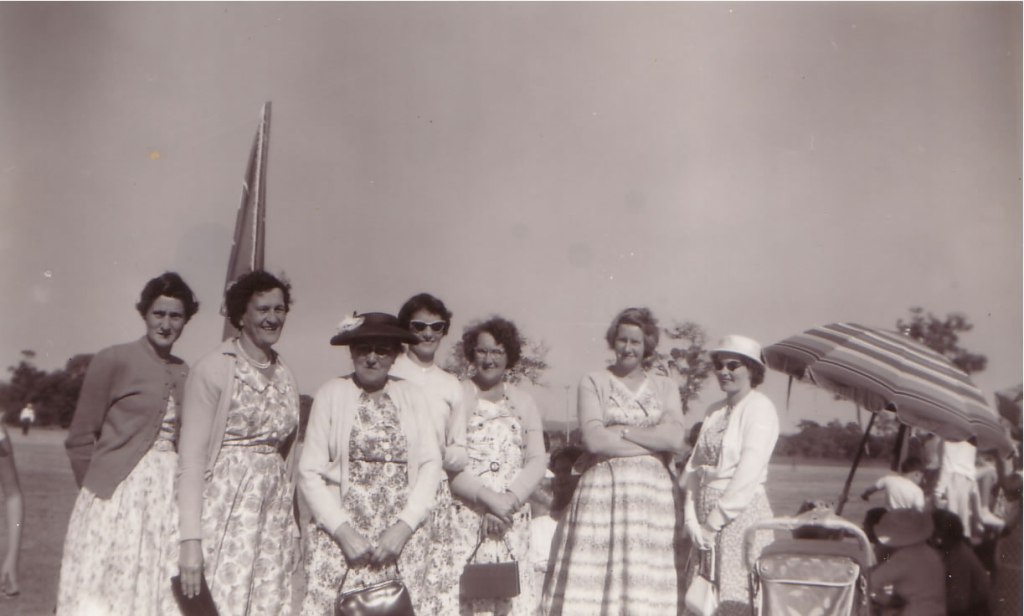
In 1961 Syd commenced building our new home at Wellington Mills, which took three years to build, not surprising. Malcolm, our youngest child, was born on 8 April, 1960.
In 1962 the AV Jennings Company commenced building the TV Station on Mount Lennard, north of Wellington Mills. The volume of transactions at the Post Office and Exchange increased dramatically at this time, and also at the bank agency. A very busy time with two children at school and a lively two year old. I was always grateful that at very busy times, or if I was away with children at sport or school functions, or indeed a day shopping in Bunbury or doing books for our own business, I could enlist the help of Lesley Hall, who lived close by.
Syd’s brother Les and his wife Margaret moved back to Wellington Mills in 1963. Les drove milk trucks for Syd for many years after this. In 1964 Les and Margaret bought the Post Office building and conducted the Post Office and shop until June 1972 when the Post Office closed. The automatic telephone exchange was installed at the junction of the then upper Ferguson and Ferguson Roads (now Wellington Mills Rd) at the Nine Mile corner, as it was always known.
Ray and Les took over the milk Cartage in 1970 and Syd farmed for a few years, whole milk dairying, and then sold the property, except for five small blocks in 1974. Syd and I continued with the fuel agency until 1978.
The Seventh Day Adventist Church was built by William Chapman, father of George and Mel Chapman, around 1959 – 1960. It was later sold to the Molokan Church, and is still owned by them today (1996).
In August, 1964 were the worst floods that I can ever remember that caused so much havoc in the South West. After many days of incessant, heavy rains, the Ferguson River burst its banks. Two of the main bridges were washed away, one on upper Ferguson Road and one closer to Dardanup, just west of John Gardiner’s property on the Ferguson Road.
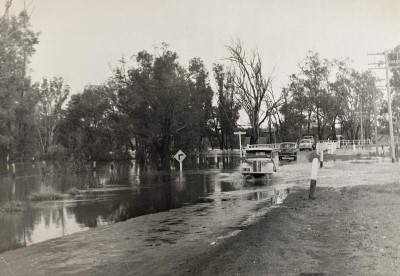
Photo courtesy of Gwen Wells.
Syd had gone to Harvey on the night milk run and the Collie River at Roelands had flooded over the bridge and was unsafe for traffic. Syd just made it over this one on the homeward journey, then motored along to Ferguson and made it over this one also. He then felt very worried about the old bridge on the Ferguson Road to Wellington Mills just around the Nine Mile corner, but It withstood the test of time, and although it was flowing over almost to the headlights of the truck, it still stands to this day. The bridge over the Preston River at Picton was washed away, and I think Moonlight Bridge was as well. The school bus had to travel through Boyanup via Prout Road, now Ironstone Road, and on through North Boyanup Road to Bunbury.
Peter MacLeod was the teacher here at the time. He drove out to the Wellington Dam, came back and said, “It’s awesome. Don’t miss it”. So out we went. What a sight to behold! It really looked awesome. (The water) seemed to be about 12 inches over the wall, and the roar was deafening. The hydroelectric shed was almost underwater, the electric lights still burning, and as Bob Weetman used to say, he saw the marron reading the newspaper. I took a photo and made for home. Could no doubt do with some of this rain these days. Some of us traveled to Bunbury via the Pile Road for a few weeks.
Syd’s father remarried in 1975 to Mrs Madge Hastie. He moved to Bunbury, and lived there until his death on 29 August, 1984 and so had almost 10 years of happiness living in town.
The Forests Department closed down in the late 1960s and has been developed as a tourism, holiday recreation centre, and many school groups came to stay, as well as many families.
At this stage, in the 1990s there are moves to have the area (Wellington Mills) upgraded and more homes to be built by developers.
In May 1979 we organized a back to Wellington Mills, which was a wonderful day with many old residents sharing their memories of the old mill town. It was 7.00 am that I noticed the first visitors had arrived. This was held about where the fire shed stands today (1996). Local residents made many cups of tea, etc. on the day, and all visitors brought a picnic lunch.
The final bread delivery to Wellington Mills from Dardanup was in February 1988. The baker at this time was Eddie Crisman.
The Wellington Mills Volunteer Fire Brigade was formed in 1985 and the fire brigade shed was opened in 1993. Syd’s dad, Albert Gardiner, was the Fire Control Officer for Wellington Mills for many years before he left the district in 1975.
On the following page is a list of the residents of Wellington mills in 1996, our centenary year.
Sadly, after almost 100 years, Ferguson Road, which followed the Ferguson River through here, was renamed Wellington Mills Road in August 1995. Syd was quite devastated over this. A roundabout was then built at Chapman’s corner, at the intersection of Wellington Mills Road and newly named Ferguson Road in 1996 and so Gnomesville was created.
Locality of Wellington Mills residents at the third of November 1996:
- Rodney and Diane Scotland
- Ray and Judy Gardiner
- Syd and Joan Gardiner
- Tony and Anne Crowder
- Felix and Mary Ann Meyzer
- Glen and Faye Dalton and family
- Alan and Jill Brooks and family
- Prim Davey and Judy Hagan
- Mike And Denise Stanko
- Bob and Chrissy Wight
- Jack Wight
- Bob and Dal Jorgensen
- Tom and Enid Hall, Kim Hall
- Bart and Hazel Mulvey
- Dawn Wight
- Richard and Diane Davies
- Mick Brown
- Tony and Lisa Ferris and family
- Joan Lantzke
- David and Kathy Rees
- Eric and Karen Jorgensen and family
- Kaz Ostrowski
- Peter and Dot Hanrahan
- Derek and Cora Walker(?)
- Kevan and Lillian Stone
- Frank and Janice Calcei and family
- George and Betty Chapman
- Kevin and Vicky Campbell and family
- Annette Webster
- Jeff and Jane Gardiner and family
- Tony and Christine Hopkins
- Rhonda Weetman
- Doug and Joyce Hatchett
- Marty and Karen White and family
- Steve and Sandra Walker and family
- Ian Doust and Albert (?) Anne
- Ian and Joyce Barlow
- Howard Kitchen
- David and Cheryl Rourke and family.
In 1991 the King Tree Lodge was built the owners, David and Cheryl Rourke. This section of Ferguson Road was renamed King Tree Road in 1995.
Syd was a Shire Councilor for 12 years. He represented the East Ward of the Dardanup Shire from 1964 to 1976.
In 1950 the road to Dardanup from Wellington Mills was a winding, unsealed road to the Dardanup Waterloo Road corner. Not so much through traffic then as there is today. A tourist bus from Bunbury came to Mrs Tooke’s home in Ferguson. I’m not sure how often, but probably once a month. Henderson’s Bus Service from Bunbury came through, a stopover at the homestead for a Devonshire tea and walk around the garden. The homestead was where the pine plantation is today, and the old plumbago hedge still grows there. Then the bus continued to Wellington Mills, and often passengers wandered over the old mill site.
We traveled to Bunbury and later to Collie to take school children to the vacation swimming classes each January for many years until the school here closed. At first, the lessons were held in the Bunbury Jetty area, and later at Koombana Bay.
Our wonderful inter school sports were held each year, the Forrest Districts Small School Sports Association was probably formed in about 1958. We also went to the Donnybrook Sports Day, which ceased for us in 1961.
Our family all had their primary education at Wellington Mills and then attended the Bunbury Senior High School. Malcolm attended the new Dardanup Primary School for one year and then on to high school. A bus service to Bunbury High School every day.
After returning to Wellington Mills in 1954 we continued to play badminton with Dardanup Badminton Club. Syd still played hockey with Ferguson until 1960. I played ladies badminton at Dardanup.
Also on Wednesday afternoons, Syd played cricket for Preston Cricket Club and then Ferguson, and many times, went to Country Week cricket. Later, we played tennis with the Forrest Hard Court Tennis Association and with Donnybrook Tennis Club.
Syd gave up hockey in 1960 and played golf at the Donnybrook Golf Club, and later played at Clifton Park Club in Bunbury. I started golf in 1967 in Donnybrook.
On the 4 April 1978, Cyclone Alby came down the west coast. What a day and a night! There was wind like we had never experienced before. There was flooding and fire and the end to the fruit packing season in Donnybrook. Every apple left on any tree hit the ground and was so bruised they were not fit to pack and sell.
After Syd sold the property here, he did a lot of contract work, building, etc. and also seasonal work at Wesfarmers fruit and vegetables in Donnybrook. In September 1987, the staff at Wesfarmers bought the firm, and so we became shareholders in the West Corp company. Syd was shed manager for three years from 1989 to 1992 when he retired. I did seasonal work at Paterson and Co, Wesfarmers and West Corp from 1976 to 1992 each year, mostly as tally clerk, with some sorting and stamping and lidding.
Sadly, in September 1991, my dear mother passed away aged 92 years. She often talked about the morning of the 15 April 1950 as she walked through the fire ravaged Wellington Mills.
Wellington Mills Centenary celebrations were held here on 3 November 1996. Between 600-700 people attended. It was held on the now fire brigade grounds, the old Billiard Hall site.
The old school site plaque was unveiled on the day. The plaque was sponsored by the Lions Club of Dardanup. The stone was erected by Syd Gardiner, and the plaque attached. Bob Wight unveiled the school plaque. Jack Wight raised the Australian flag at the fire shed. Dolly Kerr cut the centenary cake, which was made by Joan Gardiner.
A centenary quilt was made by Lillian Stone, Dawn White and Joan Gardiner, depicting the early days at Wellington Mills with a central photograph of the mill. The quilt was framed by Syd Gardiner and Tony Crowder, and it now hangs in the library room at the council office in Dardanup (1996), who knows, perhaps one day it will be returned to Wellington Mills to hang in a hall! The quilt was sponsored by the Shire of Dardanup.
There was a magnificent display of memorabilia on the day; local crafts, crafts of long ago, the old school hall and post office memorabilia and photographs of every description. The Old Manager’s House was open to the public, as was the old Post Office, with wonderful displays as well. Geoff Gardiner’s antique bottle display was on show at his home. Many of the bottles in his collection were dug at Wellington Mills over the years.
Bill Ferns from Dardanup came with his lovely old horse drawn buggy, which was a big hit and a delight to all, especially the children. Mr Beauglehole also brought his wagon and Clydesdale, just wonderful.
The Vintage Car Club from Busselton displayed 16 cars on the day, which generated much interest. Tony Crowder from Wellington Mills displayed his old engines, as did David Rees, (and) Syd Gardiner his 1947 model BSA motorbike.
Pony rides were provided for the children by the Ferris family. A post and rail fence was built on the day (by Bob Wight) and a tourist sign was erected just opposite the fire shed, which was sponsored by the Shire of Dardanup and all places of interest of days gone by were signposted.
A 50-page booklet, A brief history of Wellington Mills was written and compiled by Janice Calcei. It was on sale on the day and created much interest. Souvenir glasses were on sale also. So much demand for these, we had to order more. Tea and coffee, scones, cakes, etc. were provided by the community all day and served from our caravan which Syd parked on the ground with power from our big shed. It was a pleasantly warm and sunny day. It was a huge success, and I am sure will be remembered for many years to come. The day was simply not long enough.
The centenary celebrations two years earlier (1994), of the Shire of Dardanup (originally the Dardanup Roads Board) was also a huge success. My album of photographs of this day tells the story. The community here had two splendid floats in the parade that day and the paintings of Bart Mulvey of Wellington Mills still hang in the fire shed today.
For us, these celebrations brought back so many memories of long ago and friends we had not seen for so long.
Another great celebration in 1992 was the huge Gardiner reunion in Dardanup. This was organized by Leonie Gardiner of Ferguson, and she also completed a full family history for this day. It was just wonderful, and especially for Syd. Again, just not enough hours in the day.
The Wellington Mills School Reunion is to be held on Sunday, 18 July, 2004 and I’m sure I will return for that for the day. This story ends on the 9 July, 2004
I will always remember the wonderful kindnesses and caring of my neighbors and friends in the valley over these past three years, and as Syd said many times, just remember all the good times over these almost 53 years, is what I try to do.
It was such a wonderful life in that lovely Valley, such a great place to live and raise our family. A good life and now changed forever, but the memories no one can take away.
Over the years, I saw many changes in the rural lifestyle, from dairying to beef cattle to vineyards and tourism, restaurants, wine tasting, etc, bed and breakfast homes established in the area, farm stays, walk trails and of course, Gnomesville which attracts hundreds of visitors every year. And the sealed roads, which have replaced the gravel, narrow roads that I once knew which bring so much more traffic through the area.
Reference:
Joan Gardiner’s memories were recorded in a journal in the years 1996 and 2003. The journal was given to the Dardanup Heritage Collective by Michael Hall and is now in the Dardanup Archive.
 Dardanup Heritage Collective