
This is an unlikely tale. The mystery of the disappearance of a large timber building, the Alexandra Hall, from the historic Wellington Mills town site. Even more unlikely, no one realised it was missing until 2023, over one hundred years after it was last noted in a newspaper article in 1919.
The Alexandra Hall opened at Wellington Mills in 1902 and had a final mention in a 1919 newspaper story. In conversations with local residents about the hall, for the past fifty or so years, it was always said the hall building had been transported to Elgin in the 1930s to be used as a hall there. That Hall remains to this day. However, when the Elgin Hall 90th anniversary committee was contacted in 2023 to remind them of its origins, it seems their own records showed the Elgin Hall was transported from Nannup (or Pemberton (?) with funds raised throughout the late 1920s and early 1930s and had not in fact come from Wellington Mills.
There are no known photographs of the Alexandra Hall at Wellington Mills but there are many mentions of it throughout the town’s heyday, from the Hall’s opening in 1902 and up until 1919.
“Wellington Mills, Tuesday. The formal opening of the new Alexandra Hall, lately erected on the Wellington Timber Mills townsite, near Dardanup, took place on Friday last, accompanied by a ball. It was regretted by all present that Mr W. Peechey, the manager of the Canning Jarrah Timber Company, Limited, was compelled to be absent, but under the patronage of the manager, Mr C. A. Foy, the evening passed off very pleasantly. The hall, a spacious building 50ft x 100ft, with supper room, and ladies’ and gents’ waiting rooms, was tastefully decorated with evergreens and Oriental lanterns, and the committee are to be complimented on the display they effected in ornamenting the interior of the building for the occasion. Owing to the inclemency of the weather, a large number of the residents of the district were unable to attend.”
Bunbury Herald, Thursday 29 May 1902, page 3
There were two halls at Wellington Mills in early times, the public hall, the Alexandra, was most often used for family social get togethers, dances and fundraisers. There was also the Billiards Hall, built to act more as a men’s club, although it served many purposes over the life of the Mill, including as a school room.
The Alexandra Hall was situated at the eastern edge of the town, on the hill closest to what is now Gnomesville. The Billiards Hall was once west of the current church building and just up the hill from where the two fire sheds are today, in the grounds of the last school at Wellington Mills.
The last public mention of the Alexandra Hall was in May 1919. The Big Mill closed at Wellington in September and after that the town’s population declined dramatically.
“The Battalion Competition that has been in progress at Wellington Mills was finalised on Wednesday week. The whole of the proceeds go to the R.SA. appeal. The Alexandra Hall was packed when local artists gave a concert, followed by a dance. Towards midnight several auctions were conducted, a bottle of brandy realising £10. In all £200 was raised, thanks to the efforts of a bevy of popular girls who for weeks have been extracting cash from all and sundry. The pride of place was filled by Miss Ethel McCawbray, who ranged herself with the 28th and topped the poll by 2000 votes. Miss Maud Moss pushed the 11th into second place, while Miss Eva Crain got third for the 51st. The other starters who put up a creditable performance were Miss McLeod, representing the 32nd; Miss Phillis Coverley, the 16th; and Miss Jessie Hanrahan, the 44th. The night will long be remembered at Wellington Mills!
Westralian Worker, Friday 16 May 1919, page 3
It is authoritatively stated that Wellington will cut out about September, when it is quite on the cards that the settlement will move on to Kirrup.
On reflection, it does seem unlikely the Hall would have sat from the time of the closing of the big mill in 1919 until 1933, when the Elgin Hall officially opened, but never been mentioned again in the intervening fourteen years. There is a further story of a hall at Wellington Mills in 1924, but it doesn’t use the name Alexandra so it might have only been the Billiards Hall left by then.
Given the timber milling company leased or owned the town land and most of its buildings, the Alexandra Hall was most likely sold and moved in 1919 by the Millars Timber & Trading Combine, more than ten years prior to the Elgin Hall being constructed in the early 1930s.
The myth of the Hall being moved from Wellington Mills to Elgin was well and truly busted. The Elgin story may have arisen out of being confused with another story of a building moved. St Catherine’s Anglican Church was closed in 1931 and removed from Wellington Mills to West Boyanup Road in Stratham, just before the Elgin Hall was opened. Did Wellington Mills residents mix up the two stories over time? Elgin and Stratham are two rural districts in close proximity, just a few kilometres apart.
It was only in 2023 after contact between the Elgin and Wellington Mills communities cleared up this confusion that it was realised the Alexandra Hall had then been missing for 104 years.
The fate of many old of the Mills old buildings was known. Some were purchased for private housing, at least one on a nearby Ferguson farm and one in Bunbury. Others were dismantled and rebuilt as sheds. One of the executive homes ended up as Linden farm homestead at Dardanup. Millars probably transported some to other milling centres. A number perished in the 1950 bushfire that swept through the town on April 14. The Billiards Hall was dismantled by the community around 1972. Three original buildings remain today. So, what happened to the Alexandra Hall? Where did it end up? Was it moved or scrapped and the timber re-used in another building?
As it turned out, a possible answer was not long in coming. In early 2024, a chance meeting and conversation at a trash and treasure morning was perhaps the first step to solving the mystery. Just as it was realised no one really knew what had happened to the Alexandra Hall, one possibility emerged from this meeting.
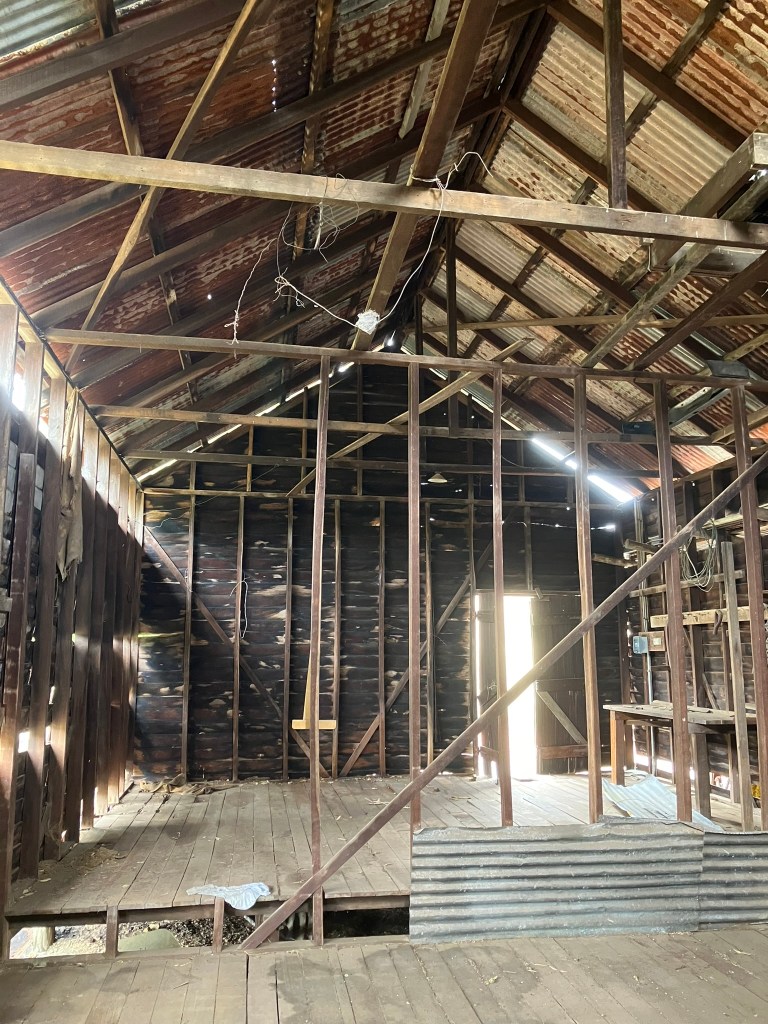
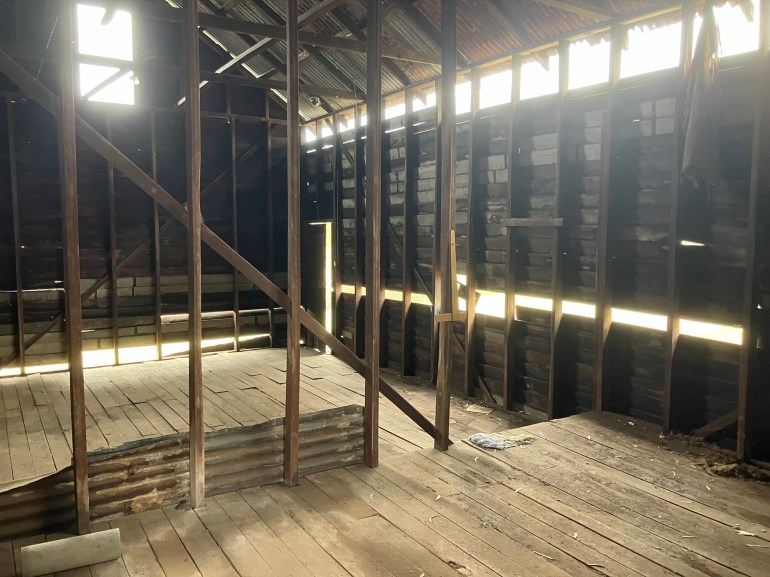
Wellington Mills resident, Mike Hall, got into a conversation with a member of the Lowden Men’s Shed. Sharing history interests, the story was told of the Men’s Shed moving an old building, reputed to be the hall from Wellington Mills, from a Lowden farm to become a part of the Men’s Shed facilities at Lowden. Completely taken aback, Mike immediately wondered whether this building could be the Alexandra Hall. It had been moved at a time unknown, likely by the Pugsley family, to their Lowden farm. The Pugsleys knew Wellington Mills well and the residents of the time knew them.
The two small rural communities, Wellington Mills and Lowden, are located close to each other, only a few kilometers apart and yet the knowledge of the movement of the building and its original purpose had almost been lost over time. Not entirely though, as a connection was finally made.
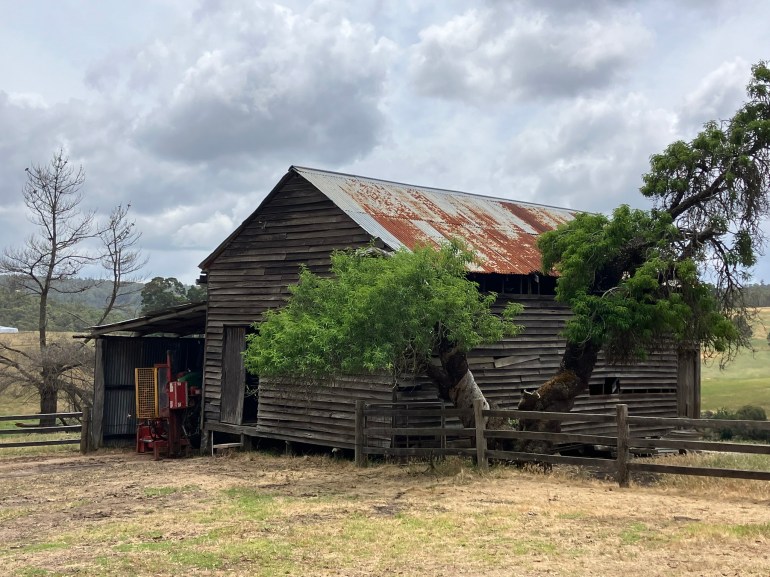
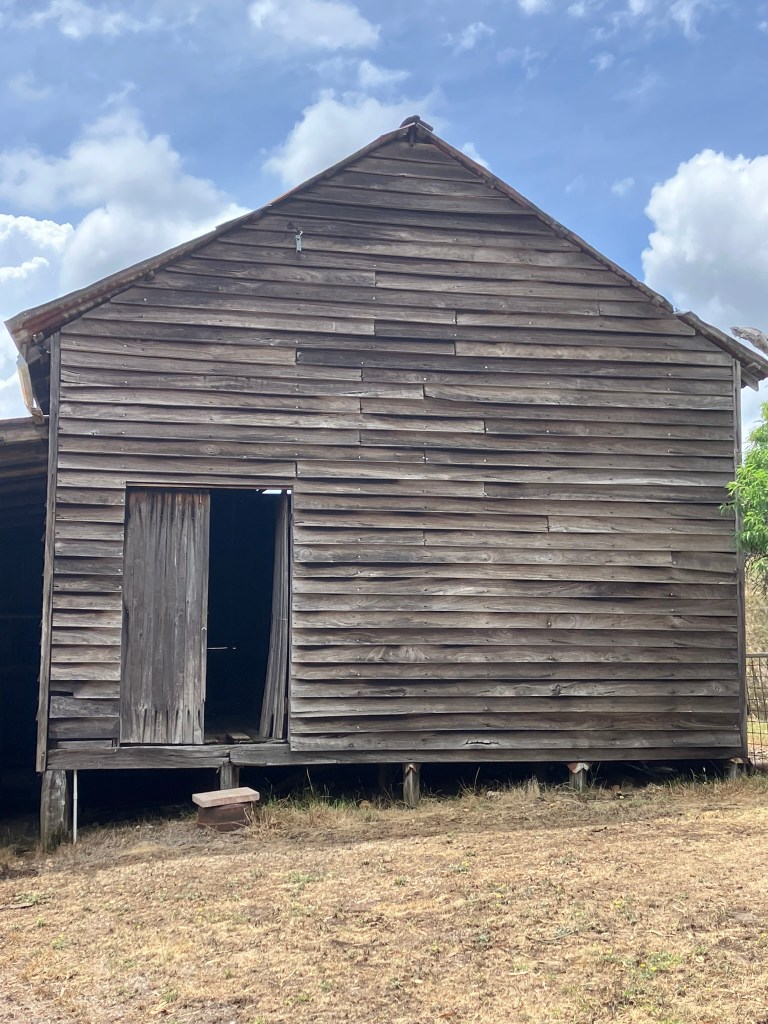
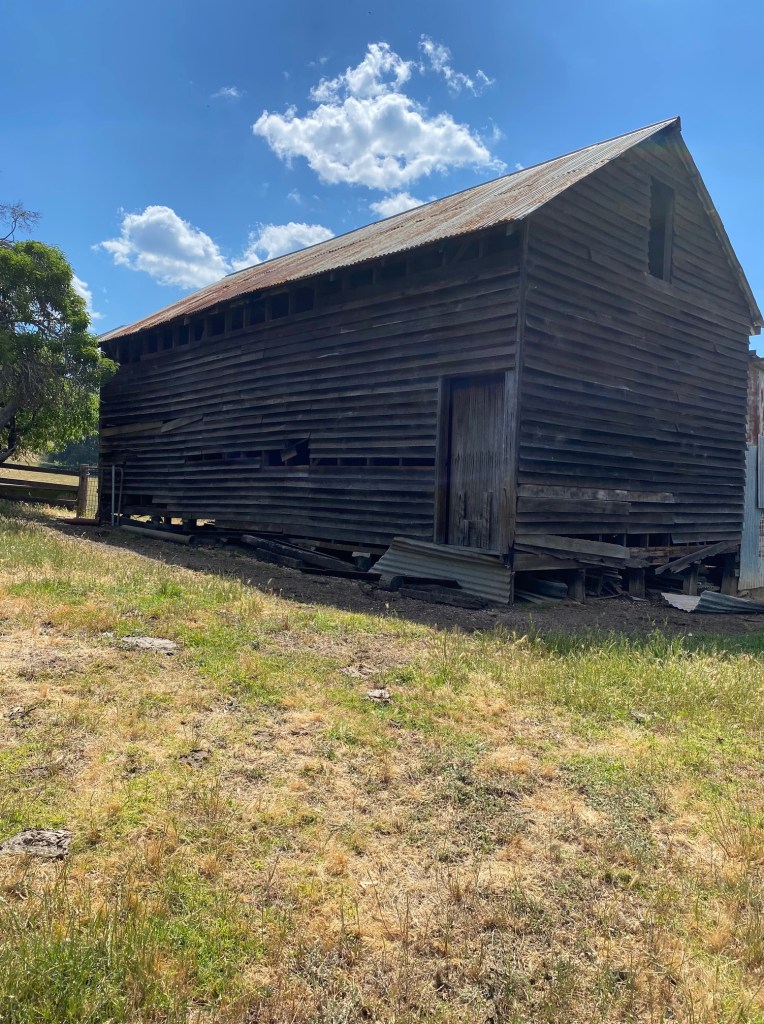
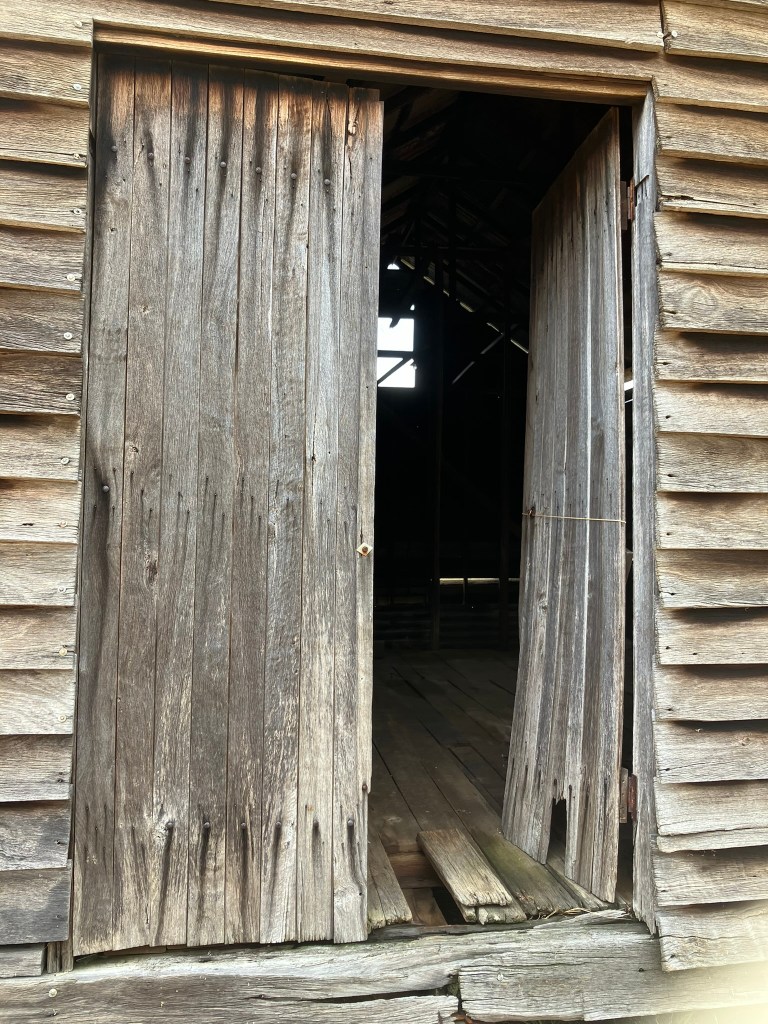
So, is it the same building? Lowden residents believe that it is. The story of the opening of the Hall describes the building as 100 ft x 50 ft, or roughly 30 m x 15 m. This building looks to be around the right era but is smaller. Was it cut down in size when moved? Or perhaps the journalist writing the original story got those measurements wrong.
A number of features indicate it might have had a previous life and then been moved to the farm. The building has a wooden floor, not typical for a farm shed. It also has a set of double doors at the entry. Again, quite unusual for a farm building.
Some questions answered but a few still to be resolved. Early photographs of the hall would be useful in verifying its provenance, and these could yet surface.
For the moment though, it is nice to think that this was indeed once the Alexandra Hall, a place of many dances and fundraising functions, of music and suppers and much merriment in a vibrant timber town during the early settlement of the South West.
 Dardanup Heritage Collective