
by Darren Foster
Updated: 10 August 2023
George Foster’s life really began in his 16th year — on 2 February 1908, the day he was sent to Dardanup, near Bunbury in the South West of Western Australia to work as a farm labourer.
George could never say with certainty when or where he was born. When he joined the Australian Imperial Force in 1914 he said he was born in Fremantle; when he was discharged more than five years later he gave his birthplace as Bunbury. By the time he married for the second time in 1929 he had reverted to Fremantle. In fact, neither was the case and is a sad illustration of the confusion and uncertainty he faced throughout his life about his precise age, birth date, place of birth and the identity of his parents, all of which vary from document to document.

What is certain is that just prior to 1896 George Foster, aged about four, arrived in Western Australia from the eastern colonies with his mother Louisa and older sister May. They were among the tens of thousands of migrants who contributed to dramatic population growth of Western Australia.
In November 1897, George and his sister were brought before the Fremantle Police Court presided over by Resident Magistrate Robert Fairbairn and GC Knight, Justice of the Peace. George was declared a “neglected child for that he was found wandering about having no settled place of abode”[1]. His sister was described in a similar fashion and, as if to lend further justification to the court’s decision, it was noted that their mother Louisa was “not of sober habits”.[2]
In the winter of 1899, after two years in the Children’s Receiving Depot in Subiaco, George was transferred to the Swan Boys’ Home near Guildford.
Dardanup
George’s opportunity to leave State care came in the summer of 1908 when he was old enough, at 15, to be sent to a farm to apply his agricultural skills and make his way in the world. He was discharged on February 2, and sent to the service of the Hon. Harry Whitall Venn, a former Minister in the Forrest Government who had an estate at Dardanup, near Bunbury.
Harry Venn was a former pastoralist and long serving politician who eventually became Commissioner for Railways until he was sacked after a confrontation with the Premier, John Forrest. Venn married Charlotte Shenton, the daughter of one of Western Australia’s most respectable families and became brother in law to Sir George Shenton, President of the Legislative Council, and Sir Edward Stone, the Lieutenant Governor.

With his experience from the Swan Boys Home farm, George had little difficulty teaming up with the other farm hands to undertake his duties at Dardanup Park. For George, his arrival in Dardanup meant the beginning of his life away from the orphanages and the deprivations of his early childhood.
Within three weeks of George’s arrival, Harry Venn died from a combination of heart failure, dropsy and pneumonia. The sad event of his employer’s death did not see George leave Dardanup. He remained, worked for Venn’s successors, and gradually built himself into a well regarded member of the small farming community.
World War I
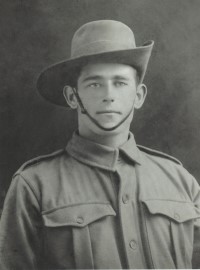
By late 1914, when George signed up with the Australian Imperial Force, he was working as a mill hand at Wellington Mill. He joined the illustrious 10th Light Horse Regiment and after training at Blackboy Hill in Perth sailed for Egypt in February 1915 on the HMT Surada.
On 16 May 1915 he sailed from Alexandria to the front at Gallipoli. Four months later he was wounded, receiving a gun shot wound to the thigh, and evacuated for medical treatment in Malta.
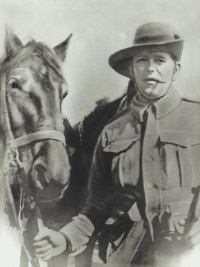
By the end of 1915, George rejoined the 10th Light Horse regiment in Egypt.
From May 1917, George was assigned to various mobile veterinary sections to look after the horses. He was in hospital in Egypt multiple times, receiving treatment for eczema, malaria, suspected cholera, abscesses and open sores. In 1918, he had surgery to remove a small piece of bomb from his thumb.
In mid 1919 George returned to Australia on the HMT Dongola and at the end of the year was discharged from service (medically unfit).
A welcome home will be tendered to a number of returned heroes, in the persons of Sergeant M Coonan and Privates J O’Neill, L Poad and G Foster in the Dardanup Hall. The known popularity of these men assures an enthusiastic gathering from Dardanup and the surrounding districts. As this completes the tally of local boys returning it is likely to be the last Welcome Home…
The Bunbury Herald (17 September 1919) reported

Farming in Dardanup
George settled back into Dardanup and took up a 200 acre farm on Paradise Road called ‘Bythorne’, in partnership with Michael Joseph O’Neill.
On September 21, 1921, George married Michael’s sister Eileen Mary O’Neill at the Church of the Immaculate Conception in Dardanup. Eileen was the fourth daughter of William and Mary Jane O’Neill and a grand daughter of the late James Maguire of Dardanup.
After the ceremony a reception was held at the home of the bride’s parents, the first item on the programme being to ‘face the camera’ which was followed by a photo being taken. Then followed a sumptuous roast – when the usual toasts were honoured in real Australian fashion. Mr and Mrs. Foster left by the afternoon train for Perth, where The honeymoon will be spent.
The Bunbury Herald (27 September 1921)
Tragically, Mrs Foster died nine months later after giving birth to a daughter, Eileen Mary (later Mrs Len Rodgers). Some years later, the farming partnership between George Foster and MJ O’Neill broke up and it was placed on the market in early 1926.
George placed his daughter in the care of her O’Neill grandparents and relocated to Perth to live with his sister (Mrs John Hawton) in Bellevue and find work. He often visited his daughter in Dardanup.

On Boxing Day 1929, George married Evelyn Cecilia Harris, daughter of Dardanup Roads Board President and local farmer Thomas William ‘Bill’ Harris and Mary Anne Harris (nee Slattery). The couple settled in Midland Junction.
World War II
With the onset of the second World War, George enlisted on the 12 February 1941. By then, he was 49 years old and a father of five children, including five year old twins.
He served as a storeman in the Ordinance Depots in Perth. While on a delivery to Northam his trucked rolled over and he received burns on an arm and leg. George was discharged in 1948.
George Foster died in 1969 and is buried in Karrakatta Cemetery.
New information
Research in recent years has uncovered that George had two brothers of which he had no knowledge. Like George, both ended up in care.
Through DNA analysis, it has now been discovered that George’s birth name was John George Maddocks and that he was born on 30 August 1891 by the railway tracks in Carlingford, Sydney. His father was George Maddocks (likely working on the railway excavation) and Louisa Stephens. There is no explanation of why or when he was renamed ‘Foster’.
[1] Govt Receiving Depot register, Department of Family Services
[2] GRD Register, Dept of FS
 Dardanup Heritage Collective