
by Jenny Golding
Updated: 12 November 2025
A Home by the River
A home by the Collie River! It would have been with quiet excitement but perhaps some trepidation for the toil ahead, that hard-working Domenic and Maria Gelmi and their son, 12-year-old James, moved from their dwelling in the forest at Shotts, near Collie, to a large but unfinished river-side home in Waterloo in 1927. It is believed the house was partially built by 1917. The Gelmis had only recently bought the 40-acre block on which the house stood but had been farming their adjoining 100-acre property for many years whilst living and working in the mining industry. Kalamunda Farm was the name chosen for their home and land.
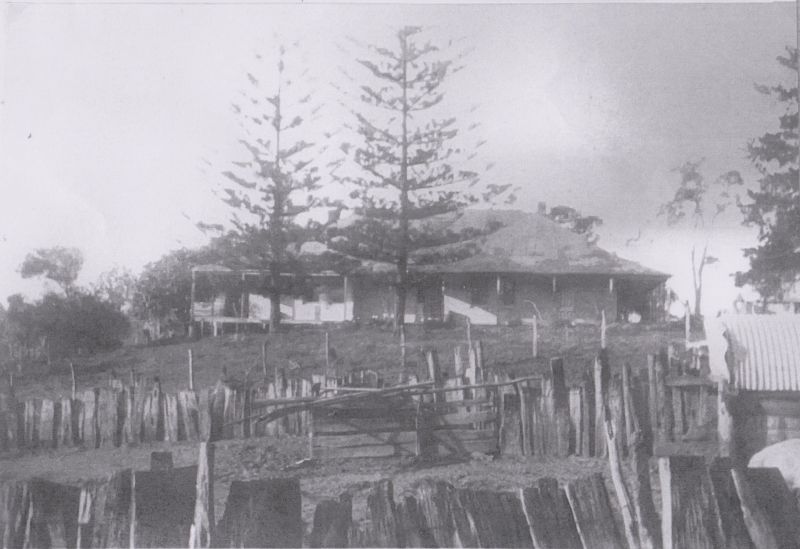
With thick walls of river mud, the house consisted of nine or ten spacious rooms but lacked ceilings under the iron roof. Floors were of timber and the main room, graced with the only smooth floor in the building, soon became a gathering place for musical evenings and dances, family celebrations, neighbourly get-togethers. Maria had a large dining table and chairs in the room’s centre. A large bed for visitors was in a corner and eventually her daughter-in-law, Eileen (nee Pedretti), set a smaller table for dressmaking near the large bay window which overlooked the river.
The Gelmi family felt that the home was always meant to be grand in stature and knew that it had been built for Bunbury businessman and Waterloo farmer, Henry (Harry) Belcher and his wife Florence. The Belchers and their only child, son Charles, came from the Eastern States to WA in 1898, establishing a butchering business in Bunbury and moving to Waterloo in 1902 when they bought land on the river from Henry Shivers. Charles was tragically killed in World War I on January 31, 1917.
The house was then sold to William Chalinor another Bunbury businessman/farmer, who may have added to the structure. It could have been placed onto a separate title because Henry and Florence remained farming in Waterloo until their respective deaths.
Maria very quickly made use of the second largest room, turning it into a huge pantry. The central table in this room held a butter churn, grain-grister, cheese making implements and a ginger-beer plant. She grew a large variety of common and less well-known vegetables including rhubarb, chillies and artichokes. Melons, pumpkins, potatoes and corn were grown in the paddocks. The orchard supplied apples, pomegranates, pears, plums, peaches, mulberries, nectaries and quinces. Excess was carefully preserved in Vacola bottles and stored in a sizable three-door cupboard along the north wall of the room. Eggs were sorted to be sent to the WA Egg Marketing Board and wax from the close-by beehives was extracted there and used to seal the interior of their wine vats. Bungs placed in the wine kegs were sent from the Waterloo Railway Station.
A piggery was in front of the house and the Italian sausages, bacon and ham produced hung, along with onions and cheeses, on wires across the room. Grandson Alan Gelmi made the comment: “The aroma was indescribable.”

Domenic had been born in Zazza in the mountain country of northern Italy and had sailed into Fremantle in March 1906, working until he had money to return home to marry his sweetheart. After they married and returned from Italy, the couple went immediately to Shotts where Maria suffered severe homesickness. “It was all bush and you had to look up to see the sun,” she said. “You can imagine coming from a town and then just to be in the bush with only the kookaburras. I would finish my housework and sit outside, thinking the sky was also over my mother. Speaking in Waterloo, she said, with feeling: “Farming was a bit of everything” but “oh dear, the work.”
The home was large enough to share with family. Following marriage, James and Eileen moved away for a time but returned to live there with their children, Barrie, Neville, Alan and Marie. Later, Neville and his wife Jennifer (nee Gardiner) lived in the house, but the crumbling home eventually became too expensive to maintain and was dismantled. The pines, planted in very early days, lived on for many years.
References:
- Interview Maria Gelmi, J. Golding
- Gelmi family interviews
- Alan Gelmi notes
Images:
- Black and white photograph – Joanne Gelmi
- Photograph of painting by Ria Bignell – Jenny Gelmi
 Dardanup Heritage Collective