
by Lyn Tyler
Updated: 7 August 2024
Taunton Vale – Boyanup-Picton Road, Paradise, Dardanup, Western Australia
Quick Links:
- 1844-1875 – George Fletcher Moore
- 1875 – 1904 – George Rich
- 1906 – 1925 – Mary Campbell Rich and the Reynolds Family
- 1925 – 1930 – The Martin Family
- 1930 – The Nicholas Family
- 1930s – 1940s – The Heppingstone Family
- 1940s to present day – The Johnston Family
George Fletcher Moore
The property now known as Taunton Vale originated from a Crown Allotment identified as Leschenault Location 27 in the Deeds Register held at Landgate the Western Australian authority responsible for property and land information in Western Australia.
Now referred to as Wellington Location 27, the first grant for this parcel of land (640 acres) was issued to George Fletcher Moore in 1844.[1]
George Fletcher Moore was born in Ireland 1798. He graduated law in 1820 and spent six years at the Irish Bar. In October 1830 he sailed to the Swan River Colony in Western Australia.
Moore obtained half of William Lamb’s [2] grant in the Upper Swan. He named the property Millendon the Aboriginal name for the area. Moore was the author of Diary of Ten Years Eventful Life of an Early Settler in Western Australia 1830-1841, one of the most important colonial accounts to be published in Western Australia.
Millendon began to be subdivided in 1914, and was developed into lots suitable for agriculture. The area has several wineries that make the Swan Valley popular for wine production.
Moore undertook expeditions and 1831 he accompanied Robert Dale [3]. Information gathered from this expedition guided Moore and he selected a large area of land in the Avon Valley. 1835 he expanded pastoral land near the Carbon River which was subsequently renamed Moore River. Moore with John Septimus Roe [4] determined the site of the original Perth Causeway across the flats to the south bank of the Swan River. Under John Septimus Roe ventured inland in hope of finding an inland sea, finding instead very arid land.
Moore joined the Agricultural and Horticultural Society formed in July 1831. The following September he attended the Governor’s first ball, writing a song and preforming on the evening.
1832 Moore served as Commissioner of the Civil Court. With good land and regular income, he had established his position as a leading grazier and by 1833 ran one of the largest flock of sheep in the colony.
Settlers disliked many of Governor Stirling’s policies [5]. In July 1836 Moore was appointed Advocate-General. His new position accorded him a seat on the colony’s Legislative Council and was therefore a position of great influence.
Moore was a religious man holding church services on his Swan estate. He was also a supporter of All Saints’ Church, Upper Swan, on whose walls is a memorial tablet to him.
Moore was unusual amongst his contemporaries in that he developed friendly relationships with the Indigenous Australians. As he learned more of their culture his awareness deepened. He published in the Perth Gazette the first account of the customs of the Aborigines of Perth.
John Hutt Esq [6] took office as governor. He shared Moore’s interest in the language of the Aborigines. In 1842 they published, “A Descriptive Vocabulary of the Language in Common Use Amongst the Aborigines of Western Australia.” A key source of the naming of the south-west flora and fauna.
In 1844 Moore continued the acquisition of land with selection in Sussex and in the Wellington region in the south west of the state.
July 1846 Governor Hutt was succeeded by Lieutenant-Colonel Andrew Clarke[7]. Moore was appointed to act as the Colonial Secretary. October 1846, Moore married Fanny Mary Jane Jackson stepdaughter of Governor Andrew Clarke.
In 1852 Moore was granted leave to visit his father in England and he did not return to the colony thus ended a distinguished public career. He died at Kensington on 30 December 1886.
George Fletcher Moore was commemorated in 1979 Western Australian Bicentennial project with a brass plaque in the City of Perth pavement.
Wellington Location 27 remained in the Moore family until 11 May 1874 when an agreement of lease with the prospect of sale was entered into by George Fletcher Moore and his nephew William Dalgety Moore [8] with George Rich of Bunbury.[9]
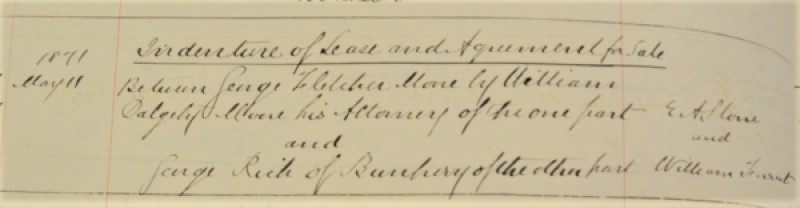
The Moore Family relinquish ownership of Wellington Location 27, 1 May 1875. George Rich purchased the property naming it Taunton Vale
[1] Australian Dictionary of Biography. The West Australian 3 April 1837. Builders of the State.
[2] Bicentennial Dictionary of W.A. William Lamb 1797-1829. Lamb was granted some of the first town lots in Fremantle. Agriculturist granted 8119 acres Swan Loc 5.
[3] Bicentennial Dictionary of W.A. Robert Dale 1810-1856. He was granted Swan Loc 10 “Oakover” which was sold to Samuel Moore (brother of G F Moore) in 1833. Dale was the first European explorer to cross the Darling Range to the Avon Valley, Helena and Canning Rivers. Selected 2560 acres at York. Dale River named after him.
[4] Bicentennial Dictionary of WA. John Septimus Roe 1797-1878. British naval service. Extensive world travel NSW survey service. Engaged in surveys of the Northern Australia. Surveyor General WA. Most significant legacy setting aside Mount Eliza for the establishment of Kings Park. Statue St George’s Terrace Perth.
[5] Australian Dictionary of Biography. Sir James Stirling 1791-1865. Royal naval service World travelled Wealthy background with interest in East India Co. First Governor of WA. Large grant of 100.000 acres was selected & changed to a number of different regions as the land was explored. They disagreed on other administrative policies and enforcement of land grant regulations.
[6] Australian Dictionary of Biography. John Hutt Esq 1765-1815. Impressed with his abilities the Colonial Office appointed Governor of 1889. An excellent Governor prudent and careful in management.
[7] Australian Dictionary of Biography. Lt Col Andrew Clark 1793-1847. Administrator of troops Van Dieman’s Land. Service in NSW, India and Europe. Governor of St Lucia, West Indies. Just six months in to his post as Governor of WA he became seriously ill and died in 1847.
[8] Australian Dictionary of Biography. William Dalgety Moore was the son Samuel Moore brother of George Fletcher Moore. He worked for John Septimis Roe. Also joined an exploration party throughout the Gascoyne with Gregory, Roe and Nairn. Business in Fremantle. He became President of the Chamber of Commerce, Director of the West Australian Bank.
[9] Land Deeds Register Landgate Western Australia
George Rich
DEATH OF MR G. RICH. Pioneer of the District. One of the most respected and widely known pioneers of the South-West in the person of Mr. G. Rich JP, of Dardanup passed away on Friday night last, the news of his death being received with regret throughout the district…[1]
Bunbury Herald Monday 7 March 1904
George Rich was baptized on 16 October 1825 in West Bagborough, a village in Somerset north of the town of Taunton in England. [2] He was the son of George Rich and Elizabeth Mary Langdon. From an early age he assisted his father on their farm “London”.
In 1845, George married Fanny Cockman in Devon England. At the time their daughter Rosetta was born in 1847 George was employed as a butcher. By 1851 George was in training as a warder aboard the “Unite” a hospital convict hulk in Woolwich, Kent.
The Stag was employed as convict transport for Western Australia. Leaving London on February 5, 1855 she carried the fourteenth of 37 shipments of male convicts destined for Western Australia. The voyage took 107 days and the “Stag” arrived in Fremantle on May 23 1855 with 89 passengers, who were pensioner guards and their families, and 255 convicts.
One of the pensioner guard families was George Rich with his wife Fanny and their four children. After their arrival George was a warder at the convict settlement at Toodyay east of the capital of Perth. It was George’s decided belief that a convict was always a convict that would cause conflict in the family when his daughter later married an ex-convict.
After ten years in the prison service George resigned his commission around 1860.
George became proprietor of the Plow and Harrow Inn. One of the first hotels in Bunbury built by the father of William Ramsay. It was almost opposite the Wellington Hotel in Victoria Street.[3] The success of the hotel declined and George turned into a general store. George purchased several properties as well as houses in Bunbury.
On 13 September 1867 Fanny died in Bunbury. George was remarried to Eliza Francis Caroline Ann Douglas Hill on 13 November 1868 at St Mark’s Anglican Church at Picton near Bunbury. George and Eliza had two daughters; Mary Campbell Rich and Grace Ramsay Rich. Sadly, baby Grace died at six months old.
Eliza’s sister Margaret was married to William Forrest, the parents of Sir John Forrest and his esteemed brothers. Her sister Grace Campbell Hill married William C Ramsay. Mary Campbell Hill married John Hay. On May 1871 George returned to farming taking on the lease with the prospect for sale of Wellington Location 27 from George Fletcher Moore. George purchased the property May 1875[4]
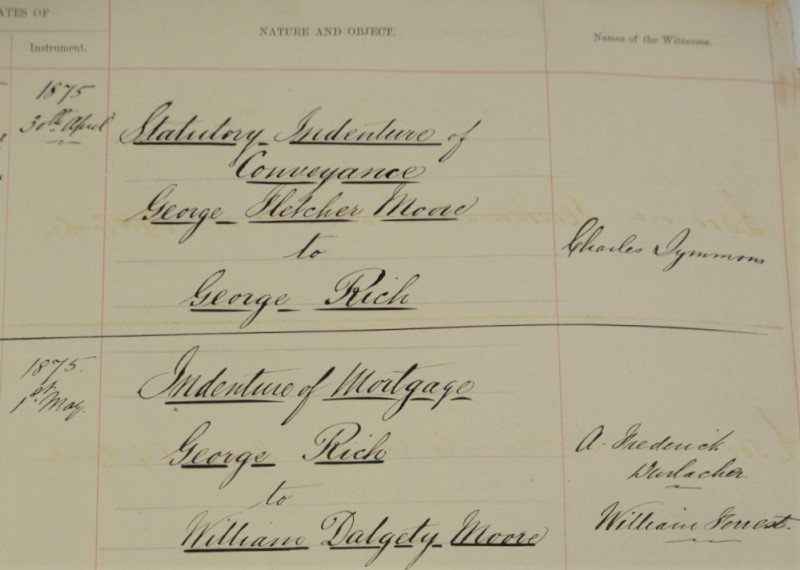
George named the estate Taunton Vale. The newly established property thrived under George’s management and his thorough knowledge of farming. He took on other agricultural pursuits, leasing and fencing the Waterloo flats as a sheep run. Taunton Vale was one of the first horse studs in the South West and was established to supply horses to the growing timber industry, hauling timber to the mills.[5] A handsome home Federation style home was built at Taunton Vale and the property became one of the most prosperous in the South-West.
William Forest built the first portion of the Bunbury Jetty. George Rich and George W Floyd extended the jetty in about 1871.[6] 1874 for many years George had the contract for the conveyance of the mail between Perth and Busselton and with this connection was the first to introduce Cobb & Co coaches in the South West. He ran the business for many years before the Government took over the running.[7] A community man and was elected to the Bunbury Council in 1876.[8]
1880 George Rich was also instrumental in some of the first timber exports from the region. Together with his brother-in-law William Forrest and other businessman they were the provisional directors of Bunbury Jarrah Timber.[9]

In early 1893 George advertised for sale his property known as Queendingup twelve hundred acres adjoining Minninup seven miles from Bunbury.[10] The property did remain in the Rich family until after George’s death when it was divided between his son Alfred his daughter Josephine and her son William.[11]
George was consulted in 1893 when The Commission for Agriculture interviewed Bunbury settlers regarding the building of the South West Railway. He argued that the need for the fresh produce of vegetables and diary to Perth would increase the production and employment into the south west. He was made a Justice of the Peace in 1894.[12]
George’s wife Eliza Caroline age 72, passed away at her residence on 19 August, 1902.[13]
George also was in failing health. In 1903 his son Alfred was farming the property along with his grandson William the son of Josephine, Mary was also living on the farm.
On 4 March 1904 George passed away at Taunton Vale. His family again visited St Mark’s Church to lay their father at rest with their mother.
George Rich’s foresight and diversification into other business enterprises allowed him to become a prominent and respected businessman in the Bunbury district.
On June 20 1904 in accordance with the will of George Rich, Taunton Vale, Leschenault, Location 27 ownership is passed to George and Eliza’s daughter Mary Campbell Rich.[14]
In 1906 Mary Campbell Rich married William Charles Ernest Reynolds from “Membenup House”, Wonnerup and they commenced their married life at Taunton Vale.
[1] Bunbury Herald Monday 7 March 1904 page 2
[2] Judy Halliday Australind Western Australia descendant of George Rich.
Bristol, England, Select Church of England parish Registers, 1720-1933. Poll Books and electoral registers 1538-1893. Taunton Polling District. Parish of Bagborourgh. England & Wales Civil Registration Marriage Index 1837-1915. Convict & passenger manifest of the “Stag” Captian HN Clarke Battye Library Perth.
[3] Western Mail 26 Nov 1942
[4] Deeds Register Landgate Western Australia.
[5] Heritage Council Government of Western Australia
[6] Bunbury Herald and Blackwood Express 20 Nov 1925. South West Times 1 Nov 1939
[7] The Inquirer and Commercial News 8 July 1974
[8] The Herald Fremantle 8 Jan 1876
[9] The West Australian 8 Oct 1880
[10] Western Mail 15 April 1893.
[11] Deeds Register Landgate Western Australia
[12] Bunbury Herald 19 Sept 1894
[13] Western mail 30 August 1902
[14] Deeds Register Landgate Western Australia
Mary Campbell Rich and the Reynolds Family
Reynolds – Rich Wedding: A very interesting wedding was solemnised at the Picton Church yesterday afternoon when Mr. Charles E Reynolds, eldest son of Mr. and Mrs. Reynolds, “Membernup” Busselton, was married to Miss Mary Rich, daughter of the late Mr. and Mrs. George Rich of “Taunton Vale” Dardanup…………At the conclusion of the ceremony a reception was held at “Taunton Vale” the bride’s pleasant home.
Southern Times – Thursday 26 April, 1906 page 5.
William Charles Ernest Reynolds was born at “Membenup House” Wonnerup on 26 of August 1878.[1] To his family he was Charles and affectionately known as “Charlie”. Charles was the ninth, of the twelve children of Joseph Gardiner Reynolds[2] and Mary Anne (Morgan) Reynolds.[3]
Both of Charles’ parents had strong family connections with many of the prominent pioneering families from Western Australia. Charles’ father, Joseph was born in England in 1819. As a young age he travelled to Jamaica, and the West Indies, to manage an estate for an old family friend, Sir William Fitz Herbert. Joseph first came to Western Australia in 1844 on the ship ‘Parmelia’, to manage the cattle property of W L Brockman. He settled in Gingin and leased farms together with Charles Bussell.
In 1860 he returned to England on the death of his father. On his return to Western Australia, he brought greyhounds, pheasants, partridge and other game in an endeavour to establish them in the new country.
Joseph selected land in the lower south west before buying property from Governor John Stirling and settling at Wonnerup, “Membenup House” was built c1861. Joseph married Mary Ellen Morgan who was born at Australind.
Joseph and Mary Ellen ran a dairy and made butter on the farm which he transported by donkey to Busselton. He has Justice of the Peace, and a foundation member of the Southern District’s Agricultural Society. Joseph had considerable success as a stock breeder and was a keen judge of horses. He died in 1912, aged 93 years.
Mary Ellen Morgan’s father John Morgan a carpenter, indentured to Marshall Waller Clifton, arrived in Australia on the “Parkfield” in 1841. Following an onboard romance John Morgan married Maria Laura Feast. This was the first marriage of settlers in Australind. Mary Ellen Morgan’s sister, Caroline married Mr. W. B. Mitchell, and became the mother of the Premier, Sir James Mitchell.
Charles’ sisters[4] married into many families linked to the early settlement of the South West. The Locke family ‘Lockeville House’, Wonnerup, the Brockman family of Warren, the Layman family of ‘Layman House’, Wonnerup, the Yelverton family of Quindalup and the Bussell family of Vasse. Charles’ brother Thomas married Virginia Prinsep the daughter of Henry Charles and Charlotte (Bussell) Prinsep of ‘Little Holland House’, Busselton and ‘Prinsep Park’ in Dardanup. His youngest brother Percy married Hilda Terry the daughter of Marmaduke Terry and Filumena (Bussell) Terry of ‘Wallcliffe House’ Margaret River.
Charles and Mary lived at “Taunton Vale “and continued farming in the same well managed way that George Rich and family had over the past thirty years. Charles had grown up with a solid farming background and established himself as a breeder of fine stock.
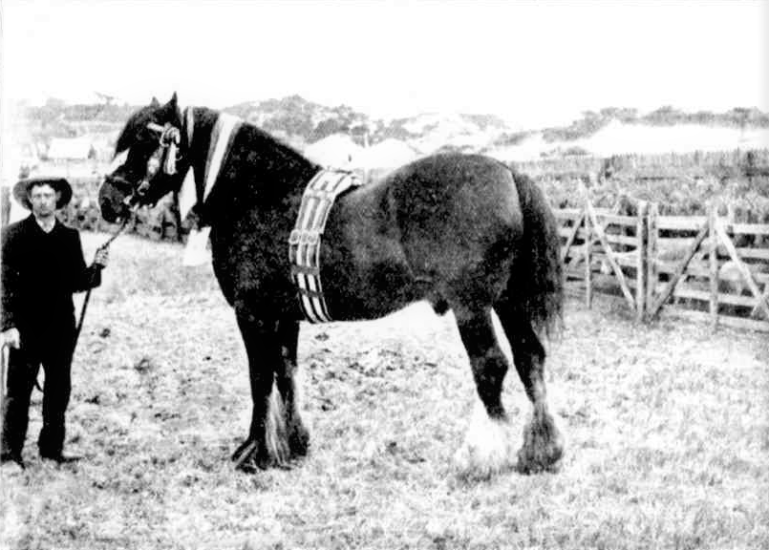
The Southern Times of August 1907, tells of that season LOCHIEL the pure Clydesdale Stallion to stand at Taunton Vale. The success continued with the stallion’s progeny recognized throughout the state.
The Clydesdale and heavy draughts of Mr. Chas E. Reynolds of Taunton Vale, scored first and champion with Lochiel, who looked handsomer than ever. The verdict was a foregone conclusion, for Lochiel is unquestionably a horse to be reckoned with.
Western Mail, Saturday 29 January, 1910.
Another remarkable successful experiment has been made with subterranean clover by Mr. C Reynolds at Taunton Vale. The clover has become firmly established and in a field being left cut for hay.
The Bunbury Herald and Blackwood Express – Wednesday 8 Oct 1919. Page 3
At the Bunbury Show in 1920, The Narrogin Trading Co, had in their display the Ridd Milking Machine. WJ Officer had come from the East to advocate the claims of the machine also to break down the prejudice against mechanical milking which existed in the West.
Dardanup Notes from our Correspondent: Another place of interest was the home of Mr. and Mrs. C Reynolds where the Ridd Milking machine was seen in full operation. Full justice was done to the crop of Mulberries which grow at “Taunton Vale”.
The Bunbury and Blackwood Express – Friday 4 February 1921, page 6
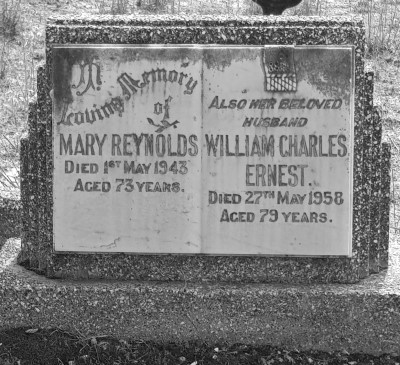
In the mid 1920’s Charles and Mary sold Taunton Vale to the next owner Harold Bernard Martin.
After selling Taunton Vale they resided in Bunbury were Mary died 1 May 1943. William Charles Ernest Reynolds died 27May 1958, they are buried together in the Bunbury Cemetery Anglican Section.
[1] Australian Birth Index 1788-1922
[2] Bicentennial Dictionary of Western Australia. Southern Times 5 Dec 1912
[3] Bicentennial Dictionary of Western Australia. Bunbury Herald and Blackwood Express 14 Jun 1929
[4] Bicentennial Dictionary of Western Australia.
The Martin Family
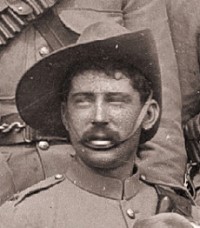
Harold Bernard Martin was born in Friedrichswald near Kapunda South Australia on 14 April 1881.[1] In 1901 he enlisted and served in South Africa to support the British in the Boer War 1899-1902.[2]
Miss Minnie Hackett was a teacher at the Ngapala in the Mid North of South Australia.
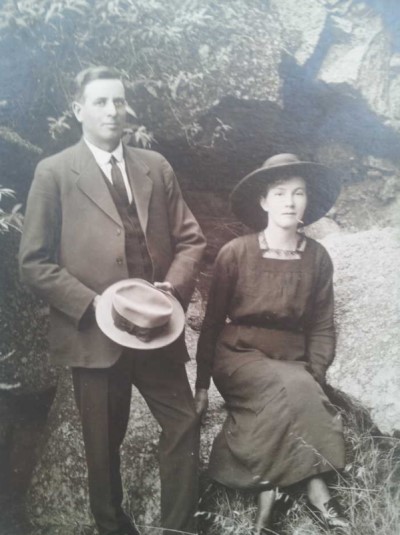
Harold and Minnie married 7 April 1920 in Murray Town, South Australia.[3] Harold and Minnie had two daughters, Nina born in 1921 and Sheila in 1923.
In February 1925, Harold and Minnie decided to sell up and move to Western Australia where they purchased Taunton Vale at Dardanup.
The Bunbury Herald and Blackwood Express on 4 September 1925, Mr. and Mrs. H B Martin of Dardanup were the proud parents of a son Henry, born at Roch’s Hospital, Bunbury.
The Martin family lived at Taunton Vale from 1925 to about 1928 and ran a mixed farming enterprise of cattle, sheep and pigs. In the time at Dardanup they made many friends and had guests visiting from Perth.
CLEARING SALE DARDANUP
The Bunbury Herald and Blackwood Express – 18 April 1928
Dalgety and Company, Limited, report having conducted a clearing sale on the account of Mr. HB Martin, Taunton Vale. The attendance of buyers from the local and surrounding districts was very good. Bidding from the onset was animated and a full clearance of the stock and plant was effected under the hammer.
In January 1930 Harold purchased the Commonwealth Hotel in Collie from Mr James Nicholas.[4] The Heppingstone Bros made the sale.
Mr. Harold Martin who brought Mr. C. E. Reynolds farm about four and a half years ago, has in turn sold the property to Mrs. Nicholas of Collie. Since Mr. and Mrs. Martin came to reside here, they made many friends who will be sorry they are about to leave their connection with Dardanup.
South Western Tribune – Thursday 20 February, 1930.
Harold and Minnie continued farming at Yourdamung Collie from 1930 into the 1950’s Their son Henry Bertram Martin took over the farm. By 1954 they were living in Nedlands, Perth.[5]
Mrs James Nicholas purchased Taunton Vale in January 1930.
[1] Australian Birth Index 1788-1922
[2] Australian War Memorial
[3] Australian Marriage Index 1788-1950
[4] Sunday Times Perth 19 January 1930. Collie Mail 24 January 1930
[5] Australian Electoral Rolls 1903-1980
The Nicholas Family
Mrs. Annie Margaret (Delamore-Browne) Nicholas[1] purchased Taunton Vale after the death of her husband James (Jimmy) Nicholas [2] 29 May 1929.
Important Country Sales – Heppingstone Bros, report having sold “Taunton Vale” near Dardanup to Mrs. James Nicholas. The property consists of a first class land with a handsome brick residence, it was selected by an old West Australian family named Rich.
West Australian- Saturday 18 January 1930 page 9
At the time of the property’s purchase Annie Margaret held the license of the Commonwealth Hotel in Collie and the family owned the property, Broad Meadows in Benger. The Nicholas family operated stations in the North West of Western Australia.
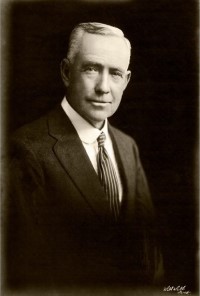
1861-1929
James Nicholas was a pioneering Australian and entrepreneur, his career was a varied one. Starting his working life at fifteen with Cobb & Co coaching. James would go on the expand the business and become one of largest operators of Cobb & Co coaches in Australia, with good friend and iconic Australian, Sir Sidney Kidman.
James had business interests in hotels and decades of involvement in the Western Australian’s agriculture industry. He could see the potential of pastoral expansion into the North West of Western Australia. He purchased outback stations and at one time was the largest land holder in Western Australia. James Nicholas had a thirty-year association with the Australian and Western Australian racing industry. Breeding, importing and exporting of horses, his connections and achievements are renowned.
Annie Margaret Delamore Browne was born 9 March 1885 in South Yarra Victoria. [3] Annie was in her mid-twenties when she married James Nicholas in his early fifties at St Clement Danes in London August 1912.[4] They would have four children together James Delamore (Jim), William Glen (Bill) and daughters Hope Margaret and Alix Price.
Although the children spent their early childhood on stations and their school years away at boarding school, they would have also spent time at Taunton Vale when their mother owned the property after purchasing it in January 1930.
It is believed at some time Taunton Vale was referred to and known as Peron Park Dardanup in line with Peron Peninsula Pastoral Station at Shark Bay which the Nicholas family operated.
Western Mail – Thursday 29 January 1931 page 26
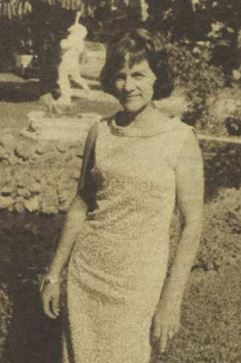
Hope Margaret Nicholas was born 7 December 1915 in Cottesloe. Hope lived on the family’s station and at ‘Board Medows’ at Benger. Hope attended boarding school at Claremont in Perth.
After her education Hope had whirlwind of social life around Perth, she kept her family and social connections in Dardanup, reportedly visiting Jessica Venn at Dardanup Park in March 1936.
Hope Nicholas married Peter Clarke in December 1940. Her sister Alix was bridesmaid.
Unfortunately, their marriage did not last. By 1947 Hope had met Langley Hancock. and they were married on 4 August 1947. It was the second marriage for them both. Lang Hancock is best known as an iron ore magnate who maintained a high profile in the spheres of business and politics. He is famous for discovering the world’s largest iron ore deposit in 1952 and becoming one of the richest men in Australia,
Hope passed away 2 April 1983 in Dalkeith. Her headstone marks her final resting place, with her father, mother and brothers in the Karrakatta Cemetery.
[1] Father was Alfred Delamore-Browne born Calcutta India. Alfred’s father was English born and an East Indies Merchant.
[2] Sunday Times 17, 24, 31 May 7 June 1925 Coaching in the Commonwealth “Jimmy” Nicholas Handles the Ribbons.
[3] Australian Birth Index 1788-1922
[4] Westminster London England Church of England Marriages 1754-1935
The Heppingstone Family
The Heppingstone family were well connected with many of the prominent families of Western Australia. Robert John and Maria (Eedle) Heppingstone resided at Frogmore Farm,[1] Brunswick Junction, Western Australia.
Robert John was the son of Robert Heppingstone[2] and Mary Ann Layman the widow of George Layman[3] of Wonnerup. His brother Arthur married Frances Hester[4] from the Hester family at Bridgetown. His aunt Ellen Heppingstone married Alfred Pickford Bussell[5] pastoralist.
Maria was the daughter of David Eedle. David was an Australind settler at Frogmore Brunswick and Crendon Donnybrook. He was an accomplished farmer and held large pastoral leases from 1858 to the 1870s.

Robert John and Maria had eleven children. Five of their sons serviced with the Australian Imperial Force (AIF) in World War I. Sadly, their fourth son Claude Athol died in France 1916.[6]
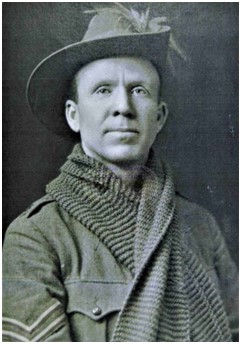
Arthur George and his twin brother Charles Robert Heppingstone were born at Frogmore in December 1885.[7] On returning from their service in about 1919, the brothers established the firm Heppingstone Brothers, and commenced trading as stock and station agents. They undertook ventures in prospecting, mining, horse breeding and were agents for negotiating land deals.
Charles married Georgina Louise (Roe) Crawford[8] the granddaughter of John Septimus Roe[9]. Arthur married Catherine Mary Connor, daughter of Francis Connor MLA MLC[10].
The Heppingstone brothers established themselves as a reliable company to facilitate selling and buying properties throughout Western Australia.
Heppingstone Bros are well known to station owners and agriculturists. They know just what is required for the varied needs of their clients, and will be glad to attend to all commissions sent along.
The Australian. Friday 2 Jun 1922 Page 1.
With a good knowledge of real estate and their association with past clients the Heppingstone brothers acquired Taunton Vale. With their affiliation the racing industry they operated Taunton Vale as a horse stud along with cattle breeding.
By 1941 Taunton Vale was again advertised for auction.
Taunton Farm – Dardanup Including 110 acres of irrigable land
South Western Times Wednesday 28 May 1941 Page 2
FOR SALE BY PUBLIC AUCTION – Monday June 9, 1941. At 1.30 pm
DALGETY & Co. Ltd. Have been favoured by the instructions from Mr. George Heppingstone
To offer by public auction his well-known farm lands, together with homestead and improvements.
The final sale of Taunton Vale may have been delayed due to WWII. A clearing sale of sundry items advertised in Dalgety’s Review.
DARDANUP SALE
Dalgety’s Review Thursday 9 January 1947 Page 4
Monday January 13 1947
400 CATTLE In Dardanup Sale Yards at 1.30 pm.
Sundry Items – Household Effects
Taunton Vale farm near Dardanup at 11 am.
[1] Blackwood Times (Greenbushes WA) 9 Nov 1934
[2] Bicentennial Dictionary of WA. Robert Heppingstone came to WA 1830 on the “Warrior” servant to Capt. Molloy (who he served in the Napoleonic Wars) accompanied him to Augusta. He was drowned when washed off rocks at “Cape Leeuwin”.
[3] Bicentennial Dictionary of WA. George Layman’s son of a surgeon 1827 went to Tasmania. Arrived WA “Orelia”1929. Granted 500 acres Augusta. Took a land grant of 500 acres at Wonnerup 1832. 1841 speared by natives and is buried at “Wonnerup House” which still stands today.
[4] Bicentennial Dictionary of WA. Daughter of Edward Godfrey Hester Constable 1846 at Bunbury. Bunbury timber merchant, storekeeper &owned town Lots. 140 acres 1867 in Nelson district a Bridgetown settler & grazier owned “Blackwood Park” and Steam flour mill. Member Nelson Road Board.
[5] Australian Dictionary of Biography. Pastoralist at Augusta, Vasse and with his brothers established Cattle Chosen. Alfred lived at Broadwater. After marriage moved to ‘Ellensbrook’ & ‘Wallcliffe’, Margaret River.
[6] Australian WWI Military Service Records 1939-1945
[7] Australian Birth Index 1788-1922.
[8] Australian Marriage Index 1788-1950
[9] Bicentennial Dictionary of WA. Surveyor General WA 1829-1870
[10] Biographical Register of Members of the Parliament of Western Australia
The Johnston Family
The Johnston family tree has connections with families who arrived at Australind on board the Trusty. They are also connected with Bunbury’s early families of Clarke, Clifton, Forrest, Haywood and the Rose family of Parkfield Australind.[1]
Harold Douglas Johnston was born in 1896 at the family property Leschenault. With the outbreak of the World War I, he volunteered to serve overseas with the AIF as member of the Australian Light Horse.[2]
Returning home after his service, Harold married Vera Hope Piesse the youngest daughter of the Hon Charles Austin Piesse MLC. His brother Eric married Francis May Rose the daughter of Edwin Rose and Janet Clarke.[3]
Harold and Eric operated Johnston Bros’ diary.
LOCAL FIRMS ENTERPRISE
South Western Times 24 December 1936. Page 5
Messrs. Johnston Bros. of Leschenault Dairy have installed a new cooling system for the treatment of their milk and cream.
BUNBURY DAMAGE
West Australian Tuesday 16 July 1946. page 6
Bunbury July 15 Flood waters near the Picton bridge. Johnston Bros. who conduct a large dairy in Bunbury have had to hand feed nearly 100 head of cattle.
The Dardanup property Taunton Vale, was purchased by Harold Douglas Johnston in the late 1940’s. It consisted of 640 acres (258 ha), a homestead and outbuilding along the Preston River.[4]
FIRST RURAL CONSUMER
The West Australian Tuesday 1 January 1952. Page 6
Harold Johnston of Taunton Vale is the first rural consumer in the state to be connected to the State Electricity Commission’s scheme.
Harold and Vera’s sons John Piesse (Jock) and Ian split the original block.
Jock dairy-farmed his share and Ian subdivided his land.[5] Harold Douglas Drive and Vera Place, Padbury Plains Estate Dardanup remain today.[6]

Jock married Marion Williams in April of 1953.[7] They raised their family at Taunton Vale celebrating the arrival of their four children. All the family were heavily involved in community pursuits.
Jock and Marion were well known in Dardanup and Bunbury where they took a keen interest in community events and being active in the Apex Club and on the Bunbury Spring Fair Committee.
Jock was part of a group that founded the Bunbury Horseman’s Club and was also a committee member of the Bunbury Race Club. Both organisations would later make him a Life Member.
Jock’s horsemanship had him in demand judging at rural shows and pony clubs all over the State. Horses were a major focus and the family were involved in polo, polocrosse, hunting, judging, hacking, racing and breeding.
Their son, Kent was heavily involved with the horse community at the Dardanup Equestrian Centre which is home to the Henty Riding Club, Dardanup Horse & Pony Club, Dardanup Campdraft Association, Australian Stockhorse Society (South-West Branch) and Commonwealth Clydesdales Society (WA Branch).
Kent’s family remains at Taunton Vale at the time of writing.
[1] Australind Family History Society. Ancestry Australia.
[2] Australian World War I Military Service Records 1939-1945.
[3] Australian Marriage Index 1788-1950.
[4] Taunton Vale Horse Stud. About Us.
[5] Taunton Vale Horse Stud. About Us.
[6] Google Maps. Rich Place also exits Harold Douglas Drive.
[7] South Western Times Thursday 9 April 1953.
 Dardanup Heritage Collective