
by Lyn Tyler & Janice Calcei
Updated: 6 January 2025
If you have information and photographs of other homesteads or houses of interest in Paradise, built up until 1950, please let us know by using the Contact Us page.
Prinsep Park
Land that subsequently became known as Prinsep Park was purchased by Thomas Little for Charles Prinsep, Advocate General of the East India Company based in Calcatta, in the 1840s. Prinsep used the land to breed horses for export to the Indian market. He was never to visit his landholdings and returned from India to England where he died in 1864. His son, Henry Charles Prinsep came to Australia in 1866 and took over management of his father’s estates. At that time there were a number of small cottages at Prinsep Park. Henry met Charlotte Josephine Bussell and they were married in 1868. They built Prinsep Park homestead the same year.
Henry Prinsep began exporting timber sleepers, for the building of railways, to India, but after a disastrous journey in 1870 when the Hiemdahl, loaded with timber and horses, sank in the Hooghly River near Calcutta, the younger Prinsep was soon facing bankruptcy. The cargo had been uninsured. In 1877, Henry Prinsep sold the entire Prinsep estate to Henry Whittall Venn.
Prinsep Park was offered up for sale in 1905, along with other land owned by HW Venn. In 1920, the house was leased by the Sisters of Mercy and became a Catholic School until a more permanent building, the Convent School, was built and opened in 1922 in Dardanup
In 1923 Prinsep Park and other land around Dardanup was resumed by the the Western Australian Government and was re-sold at favourable rates as the Dardanup Estate, a Soldier Settlement Scheme to provide work for soldiers returning from World War I. The scheme was also intended to increase productivity in the region. Prinsep Park was purchased by Captain Leslie Craig and remained in the family, with his son Frank Craig a subsequent owner from 1951, until the mid 1980s.


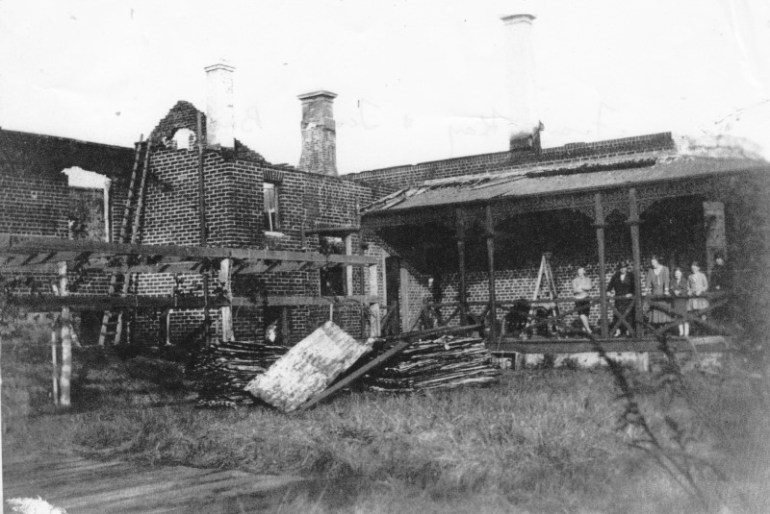
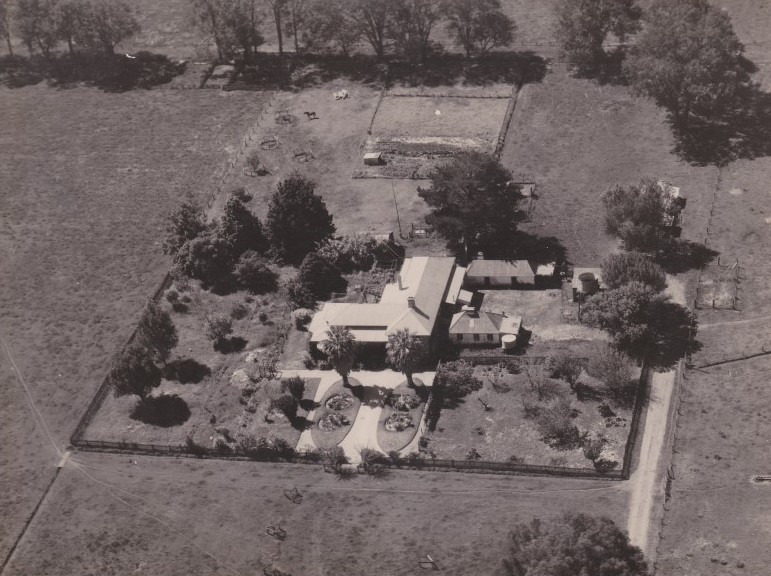
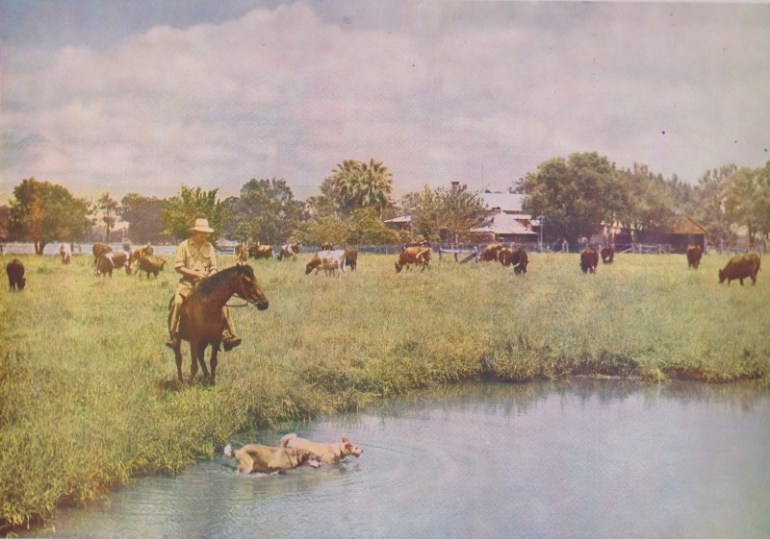
The Prinsep Park homestead was renovated and extended in 2024 by the Goyder family. The older parts of the house remain, delightfully reminiscent of its 19th century origins, while 21st century extensions have created a family home to suit contemporary needs.

Taunton Vale
Below is a simple summary of the history of Taunton Vale. Click here for a more detailed history of this interesting property.
The property now known as Taunton Vale originated from a Crown allotment identified as Leschenault Location 27. Now referred to as Wellington Location 27, the first grant for this parcel of land (640 acres) was issued to George Fletcher Moore in 1844.
Wellington Location 27 remained in the Moore family until 1871 when an agreement of lease with the prospect of sale was entered into by George Fletcher Moore and his nephew William Dalgety Moore with George Rich of Bunbury.
George Rich, a retired pensioner guard, working as a convict warder, eventually purchased the property in 1875 naming it Taunton Vale. George Rich had retired from the prison service around 1860 and then became proprietor of the Plow and Harrow Inn in Bunbury. On May 1871 George took on the lease with the prospect for sale of Wellington Location 27 from George Fletcher Moore. The Moore Family relinquished ownership on 1 May 1875.
George named the estate Taunton Vale. The newly established property thrived under George’s management and his thorough knowledge of farming. He took on other agricultural pursuits, leasing and fencing the Waterloo flats as a sheep run. Taunton Vale was one of the first horse studs in the South West and was established to supply horses to the growing timber industry, hauling timber to the mills. A handsome home Federation style house was built. The property became one of the most prosperous in the South-West.
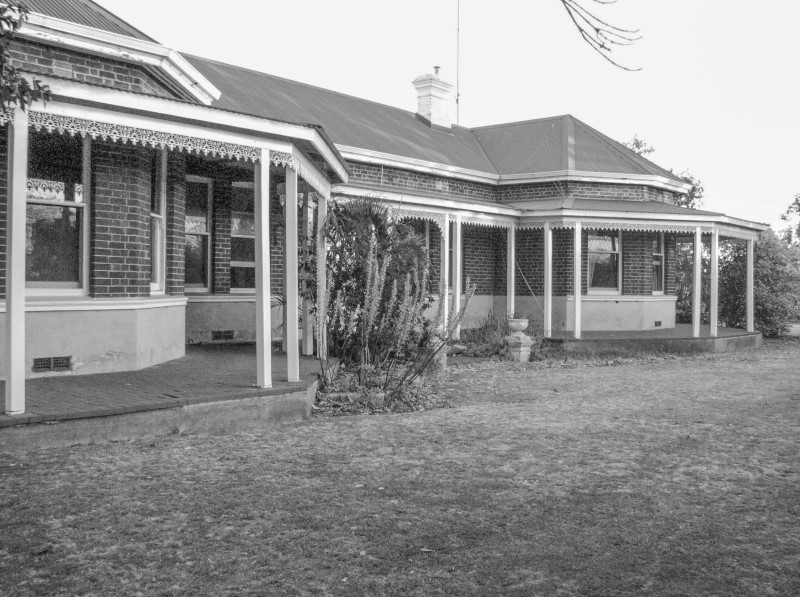
George was in failing health. In 1903 his son Alfred was farming the property along with his grandson William, the son of Josephine, Mary was also living on the farm.
On 4 March 1904 George passed away at Taunton Vale. He was buried alongside his wife at St Mark’s Church, Picton.
On June 20 1904 in accordance with the will of George Rich, Taunton Vale, Leschenault Location 27 ownership is passed to George and Eliza’s daughter Mary Campbell Rich.
In 1906 Mary Campbell Rich married William Charles Ernest Reynolds from Membenup House, Wonnerup and they commenced their married life at Taunton Vale.

Charles and Mary lived at Taunton Vale and continued farming in the same well managed way that George Rich and family had over the past thirty years. Charles had grown up with a solid farming background and established himself as a breeder of fine stock.
In the mid 1920’s Charles and Mary sold Taunton Vale to the next owner Harold Bernard Martin. Harold Bernard Martin was born in Friedrichswald near Kapunda South Australia on 14 April 1881. In 1901 he enlisted and served in South Africa to support the British in the Boar War 1899-1902.
In February 1925, Harold and Minnie decided to sell up and move to Western Australia where they purchased Taunton Vale at Dardanup. They farmed there until 1928, selling to Mrs James Nicholas of Collie in January 1930.
At the time of the property’s purchase Annie Nicholas held the license of the Commonwealth Hotel in Collie and the family owned the property, Broad Meadows in Benger. The Nicholas family operated stations in the North West of Western Australia. Annie bought Taunton Vale just after the death of her husband James Nicholas in 1929.
James Nicholas was a pioneering Australian and entrepreneur, his career was a varied one. Starting his working life at fifteen with Cobb & Co coaching. James would go on the expand the business and become one of largest operators of Cobb & Co coaches in Australia, with good friend and iconic Australian, Sir Sidney Kidman.
James had business interests in hotels and decades of involvement in the Western Australian’s agriculture industry. He purchased outback stations and at one time was the largest land holder in Western Australia. James Nicholas had a thirty-year association with the Australian and Western Australian racing industry. Breeding, importing and exporting of horses, his connections and achievements are renowned.
Annie was in her mid-twenties when she married James Nicholas in his early fifties at St Clement Danes in London August 1912. They would have four children together James Delamore (Jim), William Glen (Bill) and daughters Hope Margaret and Alix Price. In 1947 Hope Margaret Nicholas married Lang Hancock , perhaps Western Australia’s best known mining magnate.
Following the Nicholas family, Arthur and Charles Heppingstone purchased Taunton Vale. The Heppingstone family were well connected with many of the prominent families of Western Australia. Robert John and Maria (Eedle) Heppingstone resided at Frogmore Farm, Brunswick Junction, Western Australia. Robert John and Maria had eleven children. Five of their sons serviced with the AIF in the First World War. Sadly, their fourth son Claude Athol died in France 1916.

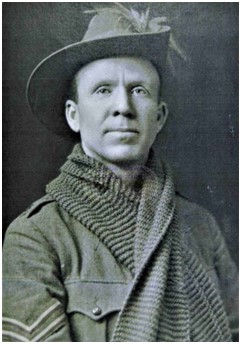
Arthur George and his twin brother Charles Robert Heppingstone were born at Frogmore in December 1885.
On return from their World War I service in about 1919, the brothers established the firm Heppingstone Brothers and commenced trading as stock and station agents. They undertook ventures in prospecting, mining, horse breeding and were agents for negotiating land deals.
The Heppingstone brothers established themselves as a reliable company to facilitate selling and buying properties throughout Western Australia.
With their knowledge of real estate and association with past clients, the Heppingstone brothers acquired Taunton Vale in the late 1930s. With their affiliation the racing industry they operated Taunton Vale as a horse stud along with cattle breeding.
In 1941 Taunton Vale was advertised for auction. The final sale of Taunton Vale may have been delayed due to World War II. A clearing sale of sundry items advertised in Dalgety’s Review in January 1947.
Taunton Vale was next purchased by Harold Douglas Johnston in the late 1940’s. It consisted of 640 acres (258 ha), a homestead and an outbuilding along the Preston River.
Harold Douglas Johnston was born in 1896 at the family property Leschenault. With the outbreak of the World War I, he volunteered to serve overseas with the Australian Imperial Force (AIF) as member of the Australian Light Horse.
Returning home after service Harold married Vera Hope Piesse the youngest daughter of the Hon Charles Austin Piesse MLC. His brother Eric married Francis May Rose the daughter of Edwin Rose and Janet Clarke.
Harold and his brother Eric operated Johnston Bros’ diary.
Harold and Vera’s sons John Piesse (Jock) and Ian split the original block. Jock dairy-farmed his share and Ian sub-divided his land. Harold Douglas Drive and Vera Place, Padbury Plains Estate Dardanup remain today.

Jock married Marion Williams in April of 1953. They raised their family at Taunton Vale celebrating the arrival of their four children. All the family were heavily involved in community pursuits.
Jock and Marion were well known in Dardanup and Bunbury where they always took a keen interest in community events and being active in the Apex Club and on the Bunbury Spring Fair Committee.
Jock was part of a group that founded the Bunbury Horseman’s Club and was also a committee member of the Bunbury Race Club. Both organisations would later make him a Life Member.
Jock’s horsemanship had him in demand judging at rural shows and pony clubs all over the State. Horses were a major focus and the family were involved in polo, polocrosse, hunting, judging, hacking, racing and breeding.
Their son, Kent was heavily involved with the horse community at the Dardanup Equestrian Centre which is home to the Henty Riding Club, Dardanup Horse & Pony Club, Dardanup Campdraft Association, Australian Stockhorse Society (South-West Branch) and Commonwealth Clydesdales Society (WA Branch).
Kent’s family remains at Taunton Vale at the time of writing.
The above is a summary of the history of Taunton Vale. Click here for a more detailed history of this interesting property.
 Dardanup Heritage Collective